← Back to all work
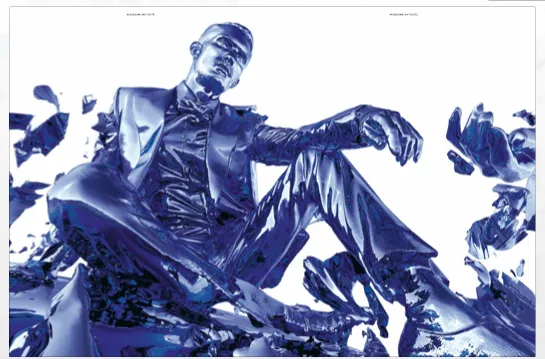
3D-scan-based fashion imagery from Magazine Antidote (2015) by photographer Daniel Sannwald

SELECTED WORK / PRODUCTION

Magazine Antidote

Studio
Magazine Antidote
Released
April 9, 2015
SCANable role
3D Scanning
  • Art
  • Beauty
  • Body Scanning
  • Editorial
  • Fashion
  • Photography

Magazine Antidote’s 2015 issue features striking 3D-scan-based fashion imagery of models Jacqueline Jablonski, Amanda Murphy, and Tobias Sorensen, created with photographer Daniel Sannwald. The editorial blends high-fashion photography with digital 3D artistry, transforming the models into sculptural forms for the magazine’s pages.

SCANable provided full-body 3D scans of the three fashion models for Sannwald and Magazine Antidote, delivering the detailed photogrammetric capture data behind the issue’s distinctive visuals.

Editorial is a different kind of client

A visual effects vendor arrives with a specification: topology, naming convention, scale units, a delivery date pinned to a shot schedule.

A photographer or an artist arrives with an idea and no such document. The deliverable is not an asset that plugs into a pipeline — it is raw material that someone intends to distort, fracture, multiply or sculpt into something that no longer resembles a person at all.

That changes what a good capture looks like. Fidelity still matters, but so does keeping the data open: dense geometry, clean texture, nothing pre-baked or pre-decided, so the creative direction is still free to move after the session has ended.

Where the resolution has to go

Every CyberSCAN™ session has a finite detail budget, and spending it evenly across a body is a mistake.

The eye audits a small number of places on a human subject: the eyes and the structure around them, the hairline, the hands, and the edge where a garment meets skin. Detail elsewhere is largely unexamined. Detail in those places is the difference between a figure that reads as a person and one that reads as a mannequin.

Planning capture around that hierarchy is more useful than raising resolution uniformly and hoping the important parts benefit.

What a photographer can actually use

Raw output is not a delivery. A point cloud is a measurement rather than a model, and dense reconstructed geometry is too heavy to pose, light or render comfortably on a workstation.

The step between them is the actual work: retopology, UV layout and clean render-ready builds that a retoucher or a 3D artist can open and start using immediately, without first repairing it.

Handing over an unprocessed capture and calling it a scan does not remove that cost. It moves it onto the person least equipped to absorb it, usually at the point in the schedule where there is least room for it.

See more fashion and editorial projects, or explore everything we capture.