

← Back to all work
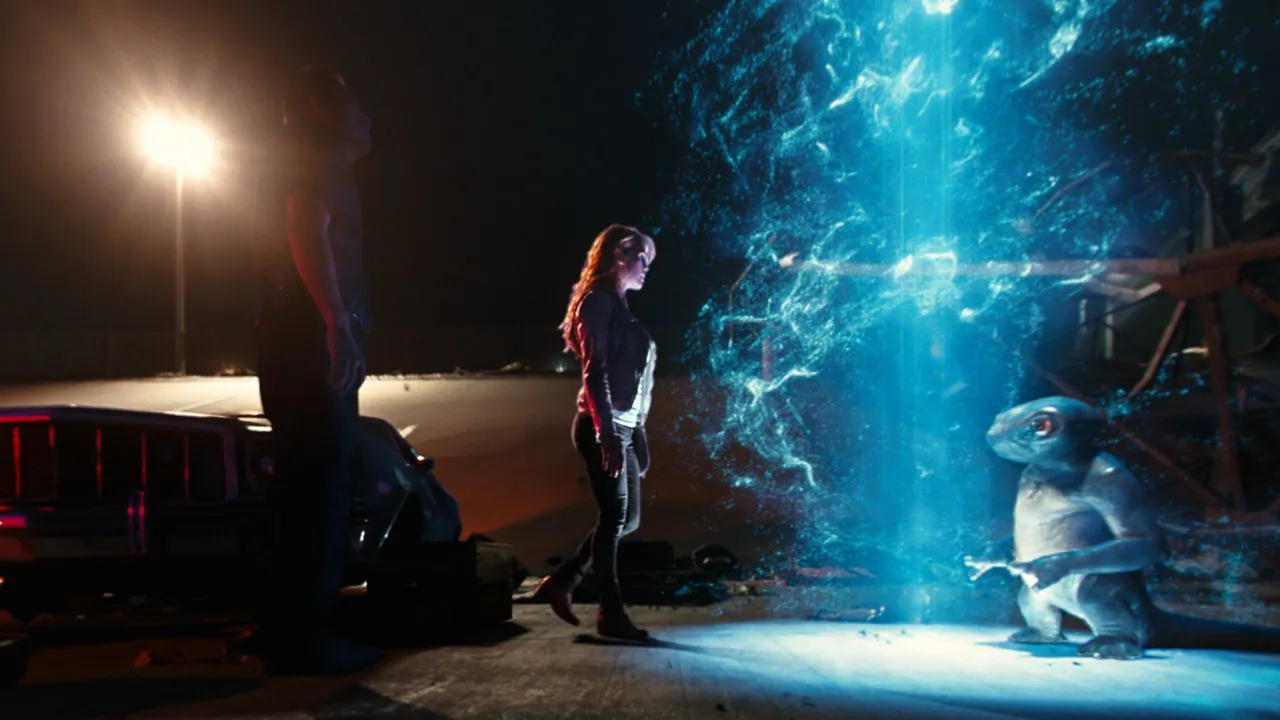
Key art for Google ATAP Spotlight Story ‘HELP’ (2015), directed by Justin Lin — Bullitt

SELECTED WORK / PRODUCTION

Google ATAP Spotlight Story ‘HELP’ by Justin Lin

Studio
Bullitt
Released
May 27, 2015
SCANable role
3D Scanning
Director
Justin Lin
VFX vendor
The Mill
  • Animation
  • Augmented Reality
  • Body Scanning
  • CG
  • Camera Tracking
  • Environments
  • HDRI
  • Motion Graphics
  • Point Cloud
  • Shadows
  • VFX
  • Vehicles

‘HELP’ is Google ATAP’s 2015 Spotlight Story directed by Justin Lin — the platform’s first immersive, live-action film made uniquely for mobile. The fourth story in the series that launched in October 2013, it is a classic tale of explosions, aliens, heroines and heroes in which the phone holds the story, giving the audience a window to look anywhere, set the pace and frame the shot. Groundbreaking in combining live action and cinematic-quality visual effects in a 360-degree environment, the film debuted free on May 28, 2015, in the Google Spotlight Stories app for Android and iOS. The Mill collaborated on every aspect, even developing ‘Mill Stitch,’ proprietary software that stitched multiple cameras into a continuous 360-degree view on set and in post.

SCANable captured all of the sets, locations, actors and vehicles in 3D — photogrammetric capture and laser scanning that gave the production measured geometry and point-cloud data for recreating each element as a photorealistic digital asset inside the film’s vast CG environments.

In 360 degrees there is no off-camera

Conventional coverage protects a production. Anything outside the frustum does not need to exist, and a set can be a facade with scaffolding behind it.

A story the audience can look around removes that protection entirely. Every direction is potentially the shot, chosen by a viewer holding a phone, and nobody on set can know in advance which way they will turn.

That changes what capture has to deliver: not the parts of a location a director framed, but the location — complete, measured, and consistent in every direction. Set and location scanning is the only practical way to acquire that much space accurately.

One coordinate space for sets, actors and vehicles

Sets, people and vehicles are usually captured with different instruments, at different times, for different departments. They become a single scene only if they share a coordinate system and a real-world scale.

Establishing that at capture time, rather than reconciling it months later, is what lets a performer scanned in one session stand at the correct height on a floor scanned in another, beside a vehicle whose wheelbase actually matches the plate.

Rescaling downstream is always possible. It is also where continuity errors are born.

Shadows need something to land on

A CG element with no contact shadow floats, and no amount of surface detail rescues it.

Contact requires geometry — the real floor, the real kerb, the real slope of the ground the object is standing on. Point-cloud data of the physical location supplies shadow-catching surfaces that match the plate exactly, and lighting reference measured in the same place tells the renderer where the light was coming from.

This is the least visible part of the work and the first thing an audience notices when it is missing.

Explore more immersive and VFX projects, or see the full service list.