

SELECTED WORK / PRODUCTION
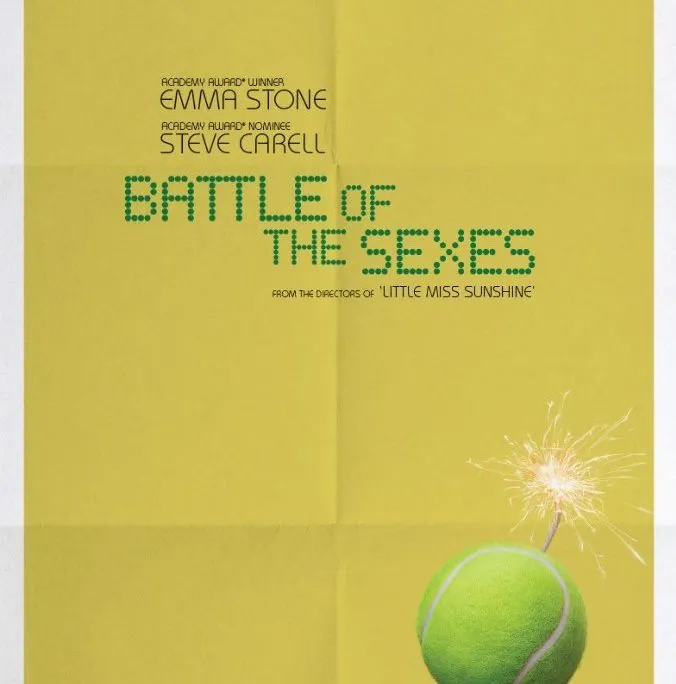
Battle of the Sexes
- Studio
- Fox Searchlight Pictures
- Released
- September 28, 2017
- SCANable role
- LiDAR/3D Scanning and Modeling
- Director
- Valerie Faris & Jonathan Dayton
- VFX vendor
- Lola VFX
Battle of the Sexes is the 2017 film dramatizing the electrifying 1973 tennis match between Billie Jean King (Emma Stone) and Bobby Riggs (Steve Carell). Directed by Valerie Faris and Jonathan Dayton and produced by Christian Colson, Danny Boyle and Robert Graf, the film revisits one of the most watched televised sports events of all time — a spectacle that caught the zeitgeist and sparked a global conversation on gender equality. Off court, the fiercely private King struggles to come to terms with her sexuality while fighting the establishment for equal pay, and Riggs gambles his legacy and reputation to relive past glories. Andrea Riseborough, Sarah Silverman, Bill Pullman, Alan Cumming and Elisabeth Shue co-star. The film opened in theaters on September 22, 2017.
SCANable provided terrestrial LiDAR and 3D scanning with modeling for the production, capturing stadium environments as accurate 3D data to support Lola VFX’s camera tracking, crowd placement and set extension work.
The seam is the only part anyone can see
A set extension is judged at one line: where the practical build ends and the digital continuation begins. Everything above that line can be beautiful and it will still fail if the join reads.
Extensions modelled outward from measured point cloud share the practical structure’s real dimensions, so the seam has nothing to reveal. The upper tiers continue at the true rise, the columns line up with the ones below them, and the perspective is correct because the geometry was correct before anyone rendered it.
Extensions built by eye from photographs converge on something that looks plausible from the reference angle and falls apart on the second camera position. Our set and location scanning is what removes that failure mode.
Most of the data is not a hero asset
The visible deliverable on a film like this is the finished arena. The useful deliverable is much less glamorous: a dimensionally accurate record that other departments query.
Layout uses it to block shots. Matchmove uses it to constrain solves. Crowd uses it to know where bodies can stand. Lighting uses it to place sources that were physically present. None of that geometry appears in the frame as itself, and all of it determines whether the things that do appear are believable.
Reference data is the half of the job that nobody screenshots and every shot depends on.
Scale is where large venues go wrong
A stadium is not a room scaled up. It is a structure with repeating elements over a long baseline, which means a registration error that is invisible at one end is a visible misalignment at the other.
Planning scan positions for a tiered, curved volume — rather than walking it like an interior — is what keeps the whole model true. Delivery then runs through retopology and render-ready builds so a vendor receives usable geometry rather than a cloud they have to reduce themselves.
See more feature-film capture work, or browse what we provide productions.