← Back to all work
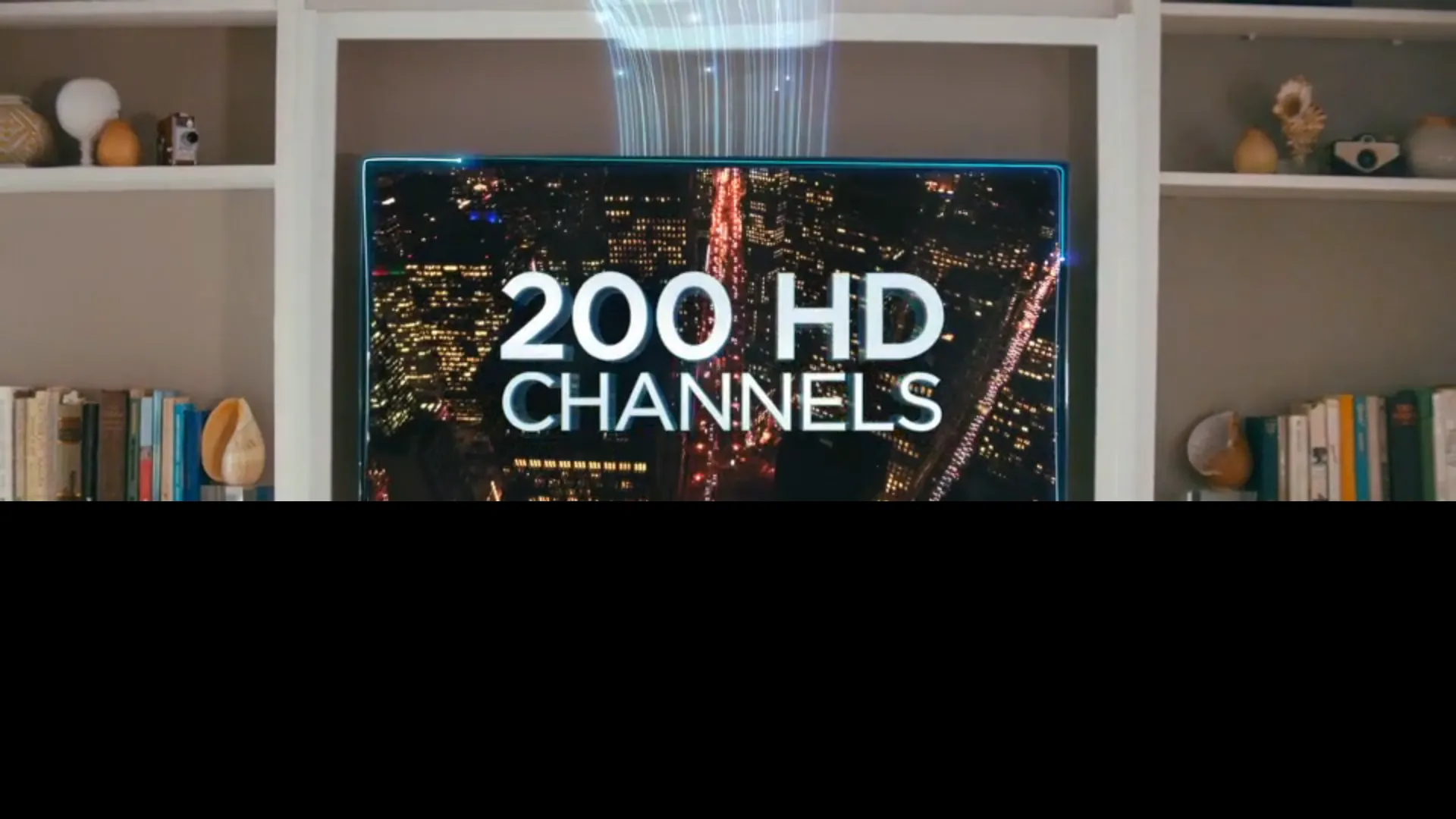
Still from the Charter Spectrum “No Limits” TV commercial (2014)

SELECTED WORK / PRODUCTION

Charter Spectrum “No Limits” TV Commercial

Released
May 5, 2014
SCANable role
LiDAR Set/Prop Scanning
VFX vendor
1st Ave Machine
  • Animation
  • Backgrounds
  • CG
  • Camera Tracking
  • Commercial/Advert
  • Environments
  • HDRI
  • Particles
  • VFX

Charter Spectrum’s “No Limits” is a 2014 TV commercial featuring CG animation and digital particle effects by 1st Avenue Machine. The spot blends live-action photography with computer-generated elements that move through real environments, giving the campaign its signature look.

SCANable provided LiDAR set and prop scanning in support of 1st Avenue Machine’s visual effects team. Our 3D scans and models were used for camera tracking and matchmoving, lighting, reflections, and the precise placement of the digital particle effects seen throughout the spot — grounding the commercial’s CG in accurate real-world geometry.


Digital elements have to be hidden by real ones

The quickest way to expose a composite is to let a CG element pass in front of something it should have gone behind.

Particles moving through a real space need that space as geometry so they can be occluded correctly — disappearing behind a table edge, emerging past a doorframe, passing under a light fixture. Depth ordering faked in 2D works for one frame and falls apart the moment the camera moves.

A scanned set gives the compositor a matching depth model of the real environment. Our set and location scanning is what makes that interaction accurate rather than approximate.

Props are their own reference standard

The practical objects on a set are the ground truth. If a prop appears in the plate and also has to appear as CG — duplicated, animated, taken apart, or extended — the digital version has to be the same object, not a similar one.

Scanning the built article removes the interpretation step entirely. Dimensions, proportions, wear, and surface irregularity all come across as measurement, and the digital copy intercuts with the real one because it is the real one.

Prop capture is quick, it happens while the object is still on set, and it is the cheapest insurance available on a spot carrying heavy CG.

Reflections give away objects that were never there

A CG element inserted into a real environment has to reflect that environment, and be reflected in it.

Both directions need geometry. Environment reflection needs a model of the room so raytraced reflections have something to hit. The reverse case — a digital object showing up in a real polished surface — needs that surface positioned accurately enough that the reflection lands where physics says it should.

Combined with lighting reference gathered at the same time, that geometry is what lets an added element sit inside the room instead of on top of the photograph. Everything ships as a render-ready asset built from the point cloud.

More brand and spot work is in the portfolio, and the full service list covers the rest.