SELECTED WORK / PRODUCTION
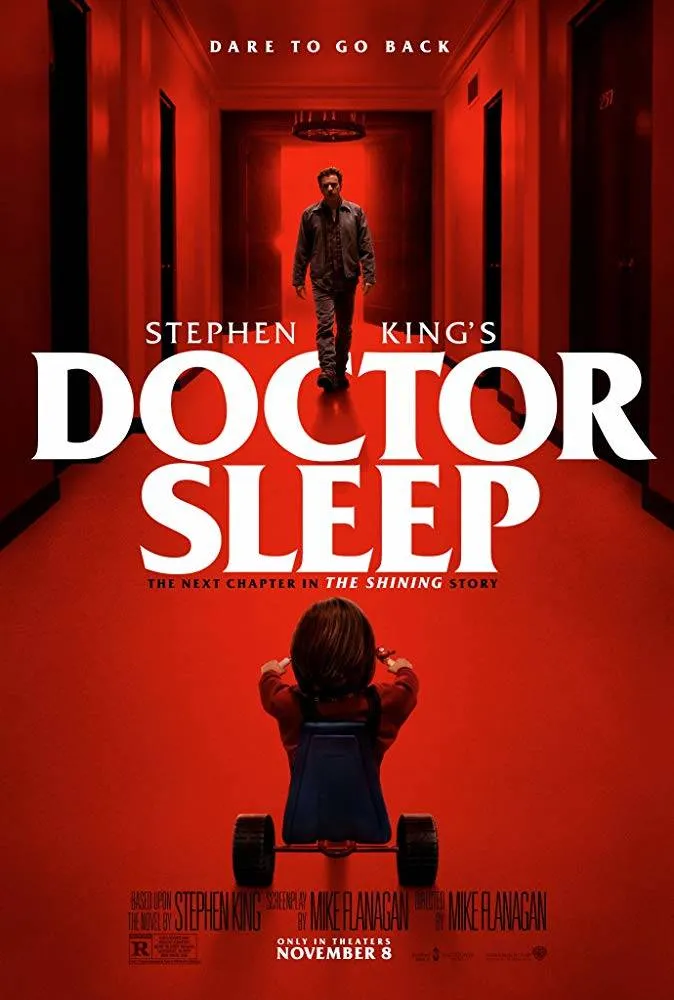
Doctor Sleep
- Studio
- Warner Brothers
- Released
- November 7, 2019
- SCANable role
- LiDAR/3D Scanning and Modeling
- Director
- Mike Flanagan
Doctor Sleep is Warner Brothers’ 2019 supernatural thriller continuing the story of Danny Torrance, 40 years after his terrifying stay at the Overlook Hotel. Directed by Mike Flanagan from his own screenplay based on the novel by Stephen King, the sequel to The Shining stars Ewan McGregor, Rebecca Ferguson, and newcomer Kyliegh Curran.
SCANable performed LiDAR and 3D scanning of sets for the production, along with several 3D modeling tasks. Our point-cloud data and models gave the visual effects team accurate geometry for set extensions and CG background work, helping the film’s haunting environments hold together seamlessly on screen.

The set exists for a few weeks
A constructed set is a temporary object. It goes up, it is shot, and it comes down — often before the edit has decided which shots are keepers and long before visual effects has finished working out what it needs.
Everything that happens to that environment afterwards depends on a record made while it stood. A measured point cloud is that record: dimensionally exact, complete, and available indefinitely once the stage has been cleared for the next production.
Productions that skip the pass rarely notice at the time. They notice in post, when a shot requires a dimension nobody wrote down and the only remaining source is a continuity photograph taken for a different purpose.
Environments that are themselves recreations
Some films build sets that reproduce a place the audience already carries in memory — from an earlier film, a photograph, or an architectural record. The tolerance for error in that case is not artistic, it is forensic. Viewers know the space.
When the practical build is scanned, every digital continuation of it inherits the same dimensions the construction department worked to. Corridors run at the correct width. Ceilings sit at the correct height. A CG extension of a room does not slowly disagree with the part that was built.
The alternative — remodelling from drawings and photographs — reintroduces exactly the drift the practical build was careful to avoid. Measured set and location scanning is how a recreation stays a recreation all the way into the composite.
Darkness does not forgive bad geometry
There is a persistent assumption that low-light environments hide errors. In practice they expose them, because a dark frame is read almost entirely through the shape of what little is lit.
A wall lit by a single practical, a corridor receding into shadow, a figure moving through a doorway — all of these depend on the geometry being right, because there is no surface detail to distract from the silhouette. Approximate geometry in the dark reads as approximate.
Props scanned individually contribute the same way: the objects the camera lingers on carry the profile of the physical build, and any digital duplicate of them matches at the edge. Everything is delivered through modeling and asset preparation as clean, correctly scaled geometry.
Browse further film scanning work, or read about the full range of scanning services.
SELECTED WORK / GALLERY