SELECTED WORK / PRODUCTION
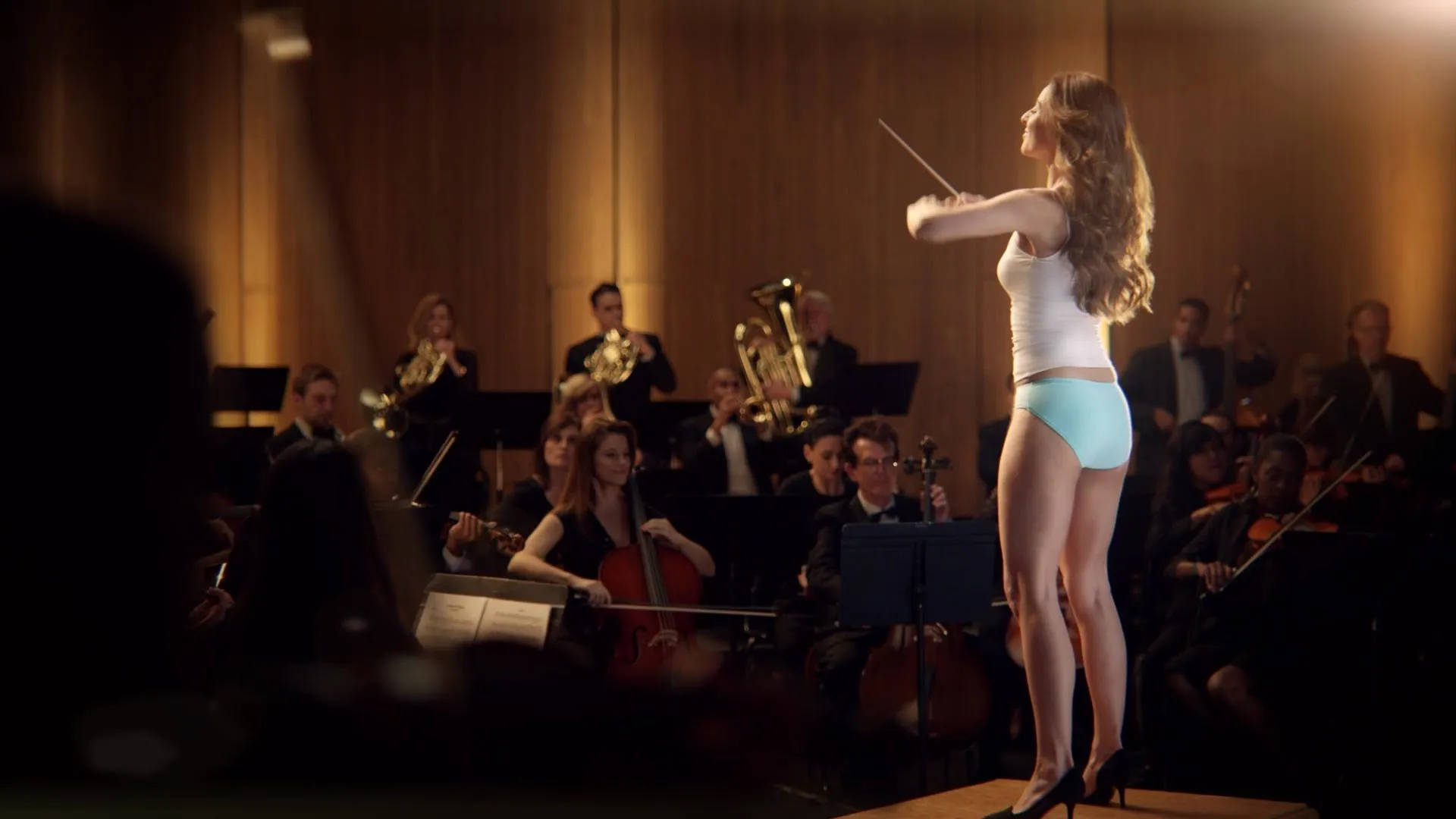
Fruit of the Loom ‘Music To Your Panties’
- Studio
- The Richards Group, Inc.
- Released
- April 24, 2014
- SCANable role
- LiDAR Set Scanning
- VFX vendor
- a52
Fruit of the Loom’s “Music To Your Panties” is a 2014 commercial from The Richards Group, its theater audience brought to life as a CG crowd by VFX studio a52. The spot stages its musical moment inside a grand performing arts venue, with digital audience members filling the house.
SCANable provided LiDAR/3D laser scanning of the Terrace Theater Performing Arts Center in Long Beach, California, capturing the venue as accurate point-cloud data. a52 used our scans to digitally populate the theater with a computer-generated crowd, with the scanned architecture supporting camera tracking and environment work throughout the spot.

What a point cloud is, before it becomes anything else
A laser scan does not return a model. It returns millions of individually measured points, each with a position in space and, usually, an intensity or color value attached.
That raw cloud is already useful. A VFX artist can measure distances inside it, place a camera in it, or check a dimension against it long before anyone builds a surface. Several departments never need more than that.
Meshing happens later, and only where a surface is actually required. Treating the point cloud as a deliverable in its own right — rather than as an intermediate step on the way to a model — is what makes scan data useful across a whole production instead of to one artist.
Coverage planning in a tiered interior
A theater is a difficult scanning subject for a simple reason: almost nothing can see everything.
Balcony fronts occlude the seats beneath them. Boxes hide the side walls. The underside of an overhang is invisible from the floor, and the floor is partly invisible from the balcony. Full coverage means planning scan positions the way a lighting designer plans instruments, then registering all of them into a single coordinate space accurately enough that the joins disappear.
Errors that are trivial at one station accumulate across a large registration. Controlling that accumulation is the actual skill in terrestrial LiDAR.
A seated audience is lit by the room it sits in
Digital crowds are usually discussed as a modeling and animation problem. They are equally a lighting problem.
An audience in a performance venue is lit almost entirely by bounce — stage light returning off walls, ceiling, and upholstery. The crowd’s illumination is therefore a property of the architecture, and it cannot be approximated with a generic light rig without looking pasted on.
Accurate venue geometry lets the lighting artist compute that bounce rather than invent it, so a digital audience picks up the same falloff toward the back of the house that real spectators would. Assets ship after cleanup and render-ready build.
There is more brand and spot work to look through, alongside the full service list.