

← Back to all work
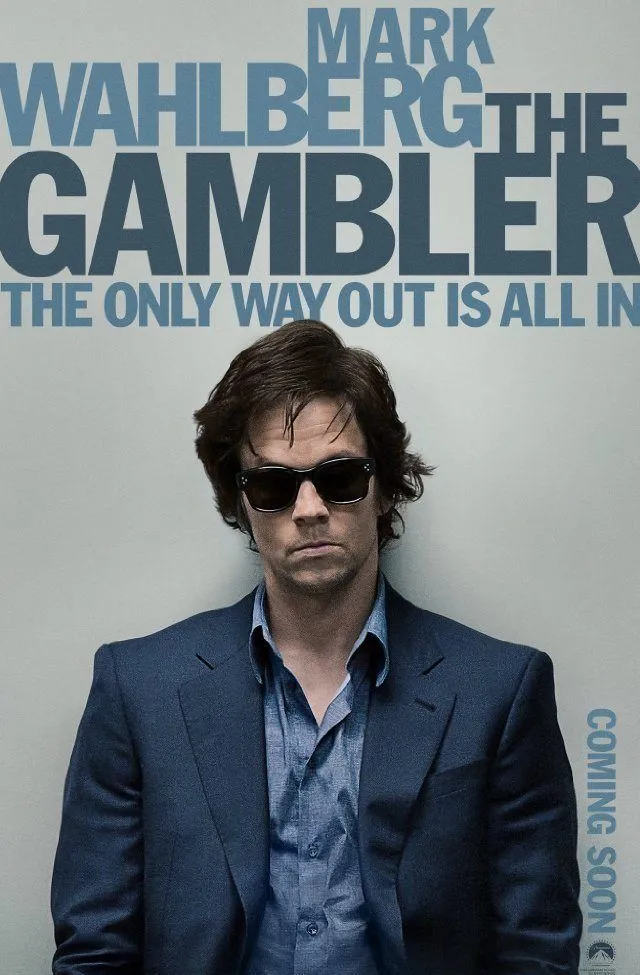
Official poster for The Gambler (2014) — Paramount Pictures film starring Mark Wahlberg

SELECTED WORK / PRODUCTION

“The Gambler”

Studio
Paramount Pictures
Released
December 24, 2014
SCANable role
3D LiDAR Scanning
Director
Rupert Wyatt
VFX vendor
Atomic Arts
  • CG
  • Camera Tracking
  • Crowd Placement
  • Feature Film
  • Fluid Dynamics
  • Particles
  • Shadows
  • VFX

The Gambler is Paramount Pictures’ 2014 drama starring Mark Wahlberg as Jim Bennett, a literature professor whose gambling debts spiral out of control. Directed by Rupert Wyatt, the film follows Bennett as he borrows money from his mother and a loan shark, while a relationship with one of his students further complicates his situation. Will Bennett risk his life for a second chance?

SCANable provided on-location 3D LiDAR scanning for the production, working alongside VFX vendor Atomic Arts. Our team scanned the Galen Center at the University of Southern California, giving the visual effects team accurate geometry to populate the computer-generated crowd throughout the basketball game scene. We also captured Jim Bennett’s residence, where the scan data drove complex fluid-dynamics simulations for a CG flood — a visual portrayal of Bennett hitting rock bottom. The photogrammetry-grade data supported camera tracking, crowd placement, and simulation work throughout.

A simulation only respects geometry it can collide against

Fluid, smoke, and debris solvers do not read photographs. They need collision surfaces with real dimensions, or the result behaves at the wrong scale — water that pours too fast for the volume it is filling, or spills through a wall that was modeled a foot out of place.

Measured interior geometry gives a simulation the room it is actually flooding. Stair treads, door thresholds, floor levels, and furniture masses all become constraints the solver obeys, and the water finds the low points a real flood would find.

Realism in that kind of shot is decided mostly upstream of the render. It is decided when the geometry is captured.

Camera tracking wants the room, not the plate

Matchmove software solves a camera path from features in the image. It does that far more reliably when it also has a measured model of the space to solve against, because the solve is then anchored to known real-world positions rather than inferred from parallax alone.

That matters most in the shots that are hardest to track: long lenses, low-contrast walls, fast handheld moves, and interiors with repeating architectural detail. A scanned environment turns an ambiguous solve into a constrained one.

The location is only yours once

An arena books out. A practical residence gets handed back to its owner. Neither is available three months later when a shot changes and somebody needs a dimension nobody wrote down.

Capturing the space while the production still has the keys is cheap insurance. A point cloud is a permanent, measurable record of the location as it stood on the shoot day — including the dressing, which is gone the moment the set is struck.

See more feature-film capture work, or read about modeling and asset delivery.