

← Back to all work
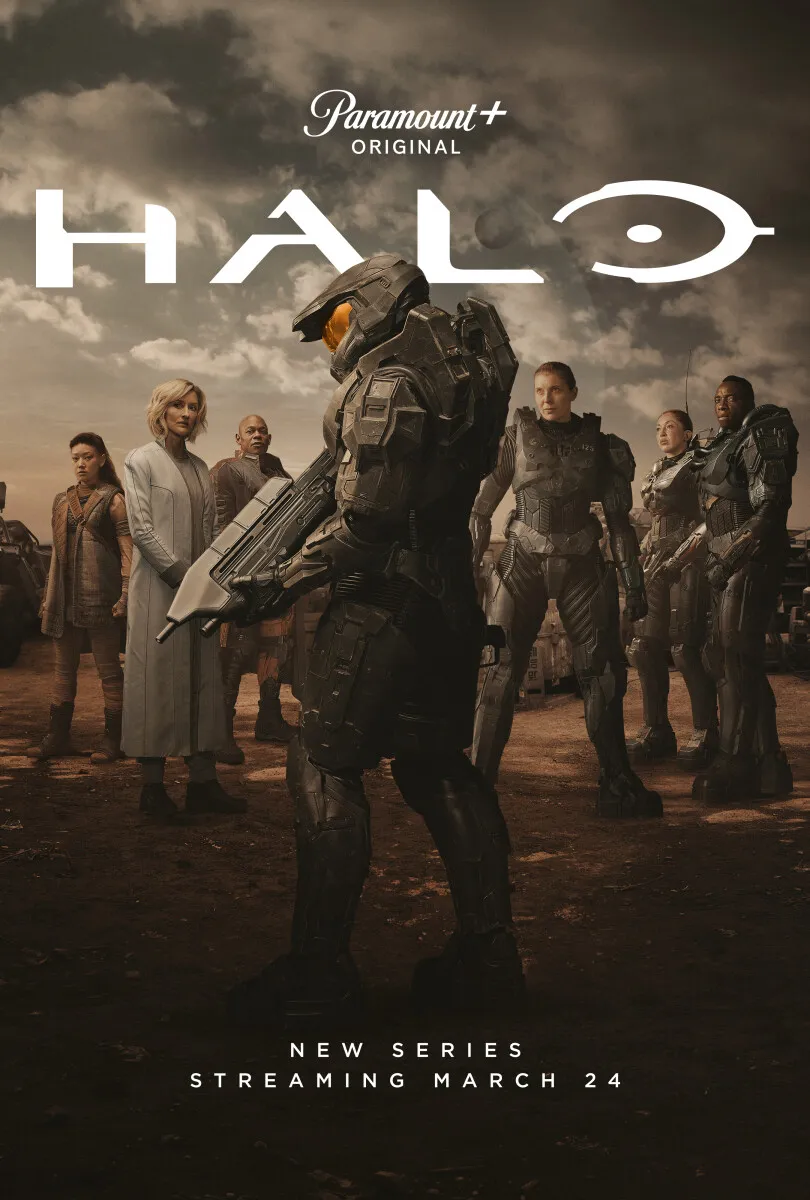
Key art for Halo Season 2 on Paramount+, the live-action series based on the Halo franchise

SELECTED WORK / PRODUCTION

Halo S2

Studio
Paramount+
Released
February 7, 2024
SCANable role
3D Scanning
  • Aerial Photogrammetry
  • Body Scanning
  • CG
  • Environments
  • Television
  • VFX

Halo Season 2 on Paramount+ continues the epic 26th-century conflict between humanity and the alien threat known as the Covenant. The series weaves deeply drawn personal stories with action, adventure, and a richly imagined vision of the future. Executive producer Kiki Wolfkill has explained that the show is a standalone story set within its own “Silver Timeline,” separate from and inspired by the core canon and lore of the transmedia franchise, giving the two Halo canons a chance to evolve individually to suit their media.

SCANable provided 3D body scans of principal characters and stunt performers used for additional visual effects, and captured aerial photogrammetry of several location sets, delivering the scan data that supported the show’s VFX environments.

The shots a performer cannot be in

Every action series accumulates a list of cuts that no one is going to physically perform. Falls that end badly, impacts at a scale a rig cannot sell, and sequences staged in places that do not exist and never will.

Those shots get made digitally, and the audience judges them against the coverage on either side — footage of the real performer, shot minutes earlier, in the same light.

That is the standard a digital double has to meet. It does not need to survive isolated inspection; it needs to survive being cut against the genuine article. Scanning both the principal cast and the stunt team is what allows a sequence to move between practical and digital coverage without the audience finding the join.

Armour is a rigid body, and rigid bodies are unforgiving

Soft costume hides a lot. Fabric moves, folds differently every take, and gives the eye no fixed reference to check geometry against.

Hard-surface costume does the opposite. Panel lines, plate edges, and mechanical joints are straight, repeatable, and immediately legible, and a viewer who has seen the practical suit will read any deviation in the digital one as wrong even without being able to say why.

Capturing the built suit as worn — on the performer, at their proportions, with the panels sitting where they actually sit — produces geometry that already agrees with the practical article. Everything after that is retopology and render-ready construction rather than reconstruction.

Turning a real landscape into somewhere else

Science fiction on this scale needs terrain that no location fully provides. The usual solution is a real place, captured accurately, then rebuilt into something that never existed.

That only works if the starting point is true. A terrain mesh derived from aerial photogrammetry carries the correct slopes, ridgelines, and distances, so when a set is extended out of it or a structure is planted in it, everything sits at a credible scale.

The alternative — inventing the landform outright — produces terrain that looks plausible in stills and falls apart the moment a camera travels through it, because invented ground has no consistent internal logic to move against.

See more series and television work, or read how cyberscanning produces this kind of data.