

← Back to all work
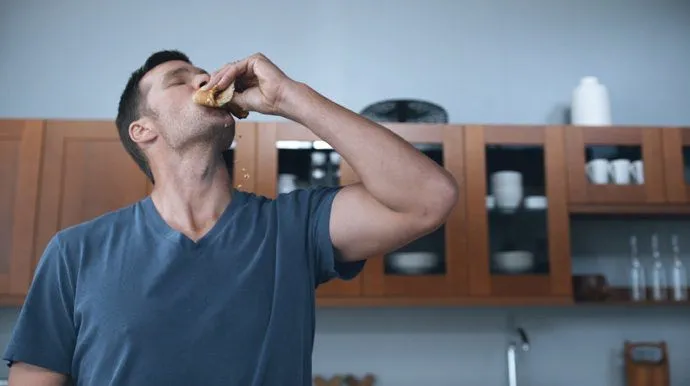
Still from Intel’s Super Bowl 51 commercial (2017) featuring Tom Brady and Intel 360 technology

SELECTED WORK / PRODUCTION

Intel 360 Technology featuring Tom Brady – Superbowl 51 Commercial

Studio
mcgarrybowen
Released
February 4, 2017
SCANable role
LiDAR/3D Scanning, Retopology and Modeling
VFX vendor
The Mill
  • Backgrounds
  • CG
  • Camera Tracking
  • Commercial/Advert
  • Environments
  • Point Cloud
  • Retopology
  • Set Extension
  • Super Bowl Ads
  • VFX

Intel’s Super Bowl 51 commercial featuring Tom Brady proves that with Intel 360 technology, you can make anything look epic — literally anything. The 2017 spot, from agency mcgarrybowen, follows Brady waking up, brushing his teeth, and eating a pancake off the floor, transforming each mundane morning moment into a sweeping 360-degree replay. It was a fitting showcase for Intel, the world leader in silicon innovation founded in 1968, which introduced the world’s first microprocessor in 1971.

SCANable provided LiDAR set scanning, retopology, and texturing to deliver a complete render-ready 3D model of every set seen in the ad, giving The Mill’s visual effects team the environment geometry behind the seamless 360-degree camera moves.

Camera positions that could never exist

A frozen orbit around a subject puts the viewpoint in places a physical camera cannot go — through a doorway, past a wall, at an altitude no rig reaches, all within a single continuous move.

Those positions have to be rendered, and rendering them requires the environment to exist as geometry rather than as a photograph. A plate only contains what the lens saw from where it stood. The instant the virtual camera leaves that position, everything outside the original frustum has to come from somewhere else.

Measured point cloud is the somewhere else. A scanned environment is valid from every angle at once, because it was sampled from many positions rather than photographed from one.

Every set, including the unremarkable ones

A campaign that transforms ordinary moments needs the ordinary rooms to be as complete as the spectacular ones. A bathroom gets the same treatment as a stadium, because the effect is applied uniformly and any set that was only half captured becomes the shot that cannot be finished.

Capturing every location in a spot is a scope decision made before the shoot, not a recovery effort afterwards. It costs setups on the day and it removes an entire class of problem from post.

Geometry alone is not the deliverable

An untextured model describes shape. It does not describe what a surface is, and a 360-degree move will travel close enough to walls, fixtures and floors that shape alone will not carry the shot.

Delivering render-ready environments means retopologised meshes with sensible UV layout and surface texture derived from the real location, so a lighting artist inherits a room rather than a blockout. That whole conversion is our modeling and texturing work.

Subjects of this type — a full space, viewable from anywhere, reconstructed from many overlapping observations — are also where Gaussian splatting has since become useful, for the same reason laser scanning was: one capture, valid from every viewpoint.

See more Super Bowl and technology campaigns, or review what we provide.