SELECTED WORK / PRODUCTION
Lexus December to Remember Commercial – “Snow Globe”
- Studio
- Elastic
- Released
- November 17, 2015
- SCANable role
- 3D Scanning
- Director
- Pat Murphy
- VFX vendor
- a52
Lexus’ “Snow Globe” spot from the 2015 December to Remember holiday campaign was created by agency Team One and production company Elastic, directed by Pat Murphy. Visual effects studio a52 handled the spot’s effects work under VFX supervisor Stefan Gaillot, with head of 3D Kirk Shintani and CG supervisor Adam Newman, and editor David Brodie of Rock Paper Scissors cutting the commercial.
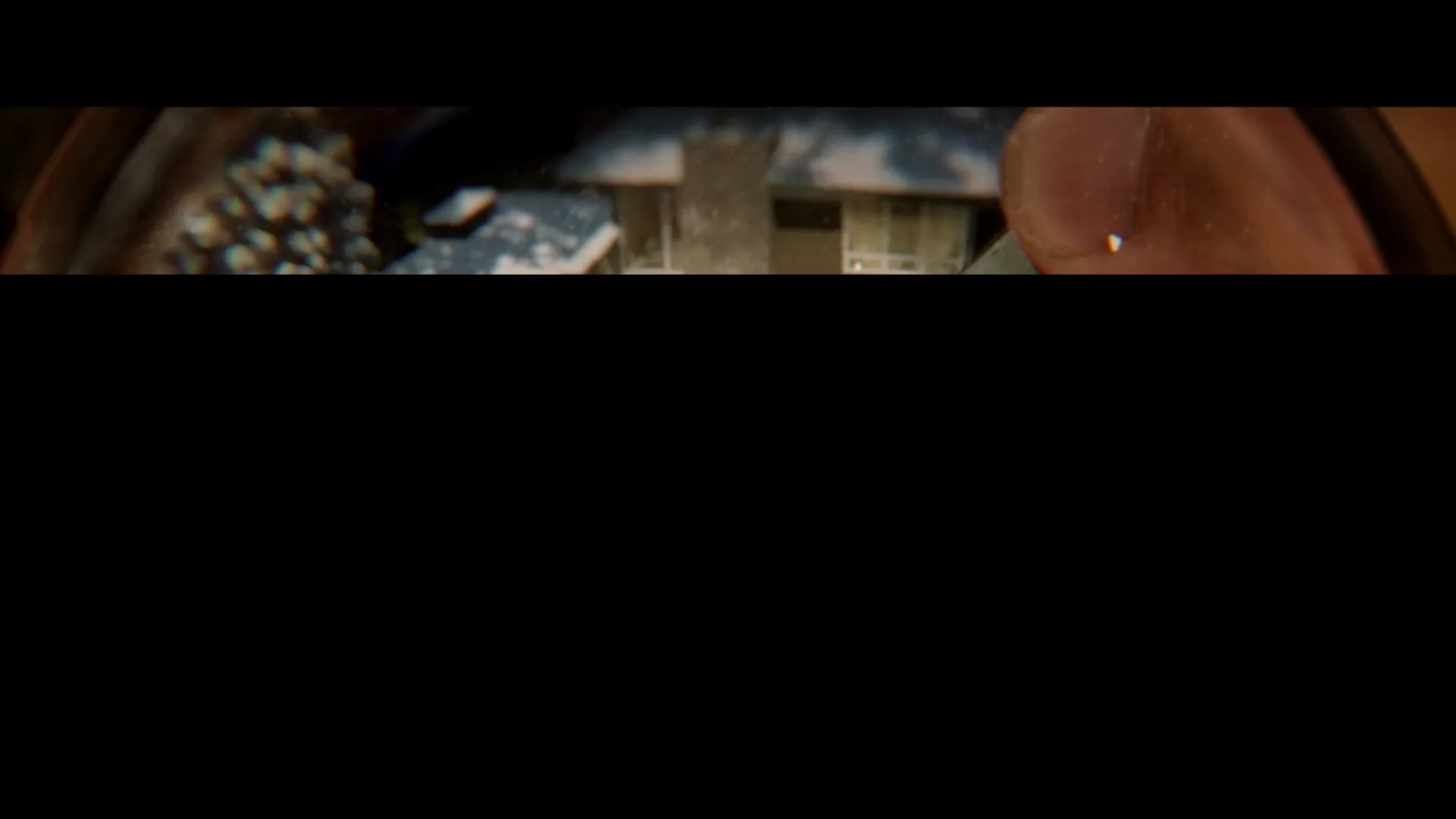
SCANable provided 3D scanning and modeling of the house in Vancouver, BC, which was 3D printed and placed inside the snow globe seen in the spot. The same measured data was also used for camera tracking, tying the miniature and full-scale worlds together.

When scan data becomes a physical object again
Most VFX scanning ends in a renderer. Occasionally it ends in a fabrication shop, and that changes the tolerance the data has to meet.
A render can forgive a surface that is slightly off, because lighting and grade sit on top of it. A printed object cannot. Every error in the mesh becomes a physical error in the part, and it is discovered late, after machine time has already been spent.
Fabrication also imposes requirements a render never asks for: watertight geometry with no self-intersections, minimum wall thicknesses that survive the process, and a mesh that has been decimated for print without losing the architectural detail that made it worth scanning. Our set and location scanning supplies the measurement; modeling makes it manufacturable.
An environment the camera cannot enter
A snow globe is a space no lens can occupy. It is too small, enclosed by curved glass, and filled with liquid — three conditions that each independently defeat a camera.
Anything that appears to be shot from inside one has to be constructed, and construction is where approximated geometry gives itself away. Curved glass distorts predictably, and the distortion only reads correctly if the object behind it has the right proportions to begin with.
Working from a measured building rather than an interpretation of one means the interior view is a genuine perspective on a real structure, viewed through a simulated shell.
Tying two scales together
The spot lives at two sizes at once: a full-scale world and a miniature one that must be recognisably the same place.
That only holds if both share a single geometric source. When the printed object and the digital environment derive from the same capture, the match is inherent rather than eyeballed, and a tracked camera can move between the two without the audience noticing a seam.
It also makes the camera solve tractable. Matchmove against known real-world dimensions is a constrained problem; matchmove against a set of guesses is not.
Explore more environment and location work, or see what else we capture.
SELECTED WORK / GALLERY