

SELECTED WORK / PRODUCTION
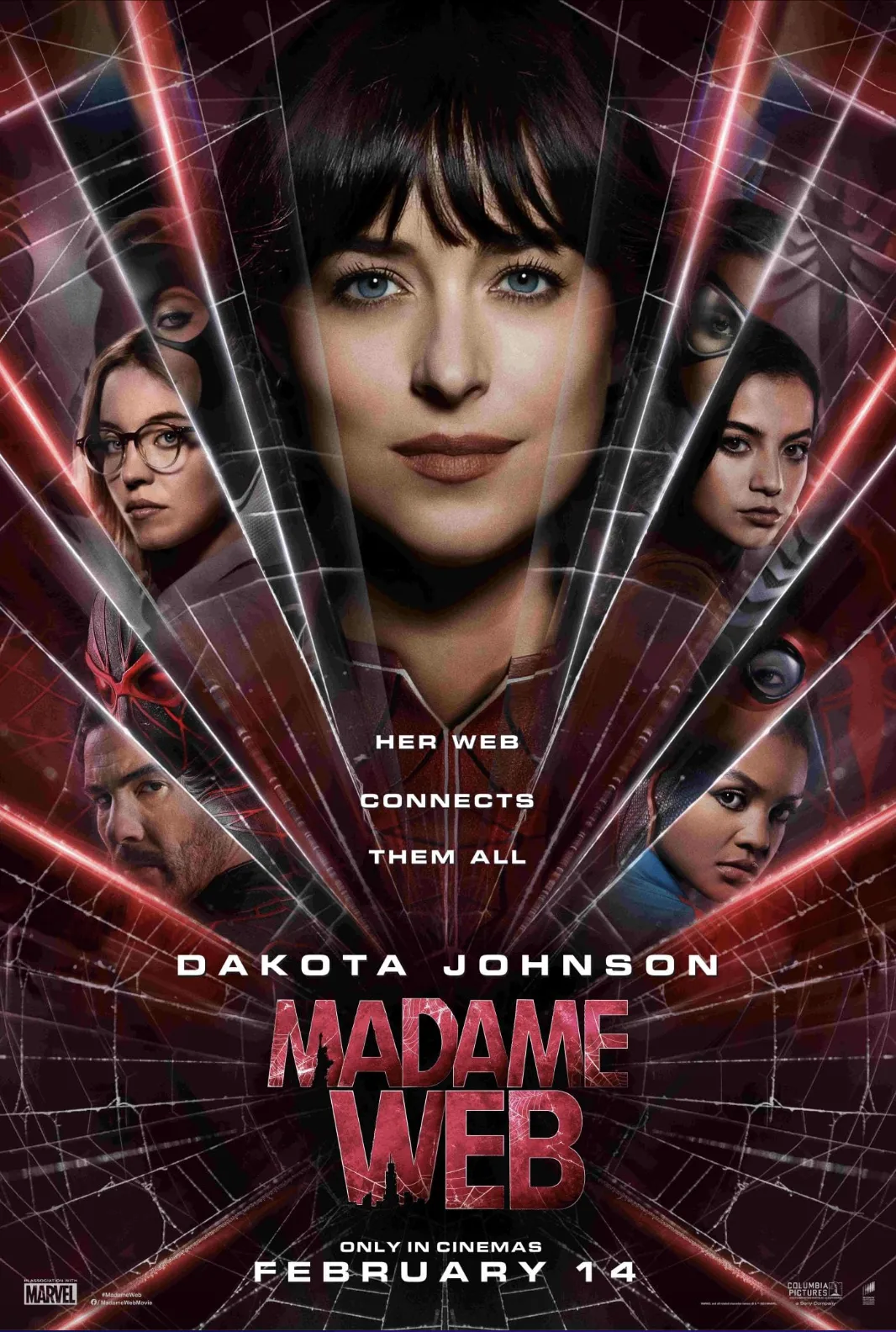
Madame Web
- Studio
- Sony Pictures
- Released
- February 13, 2024
- SCANable role
- 3D Scanning
- Director
- S. J. Clarkson
Madame Web (2024) is Sony Pictures’ superhero film featuring the Marvel Comics character of the same name, the fourth film in Sony’s Spider-Man Universe. Dakota Johnson stars in the title role alongside Sydney Sweeney, Isabela Merced, Celeste O’Connor, Tahar Rahim, Mike Epps, Emma Roberts, and Adam Scott. Directed by S. J. Clarkson from a screenplay she co-wrote with Claire Parker and the writing team of Matt Sazama and Burk Sharpless, the film explores the origin story of Cassie Webb (Johnson) as she confronts her past while trying to save three young women from Ezekiel Sims, who wants to kill them before they become Spider-Women.
SCANable provided 3D scanning for the production, capturing cast members and props with photogrammetry to support the film’s visual effects and camera tracking work.
Face replacement is the highest bar
Most digital work is judged at a distance, in motion, or under partial obstruction. A replaced face is judged at close range, in focus, by an audience that has spent a lifetime reading faces.
Nothing else in visual effects carries that much built-in scrutiny. The geometry has to be right, the proportion has to be right, and the surface has to behave like skin under whatever light the shot happens to use. A face that is nearly correct is more distracting than one that is openly stylized, because the viewer registers the error without being able to name it.
What a head scan has to record
A useful head scan is more than a shape. It is a dense record of the skull, the soft tissue over it, and the fine surface detail — pores, creases, and the asymmetries that make a specific person specific rather than generically human.
It also has to be captured in a single instant. A face cannot hold still. Micro-expressions, blinking and swallowing all happen inside the window a sequential capture needs, and each of them lands in the mesh as error. Cyberscanning fires the whole array at once, which is the difference between a facial capture that is usable and one that is approximately right.
Stunt coverage and matched performers
Superhero action is largely performed by stunt doubles, and much of that coverage is later given the principal’s face.
That only works if the head scan and the body it is placed on agree on scale, orientation and coordinate convention. Capturing both to the same standards, in the same framework, turns the join into a technical step rather than a creative rescue. Digital doubles leave here after retopology, UV layout and render-ready preparation, so the receiving facility can combine them without first rebuilding them.
The portfolio holds further feature-film capture work; the full service list sets out what else we do.