← Back to all work
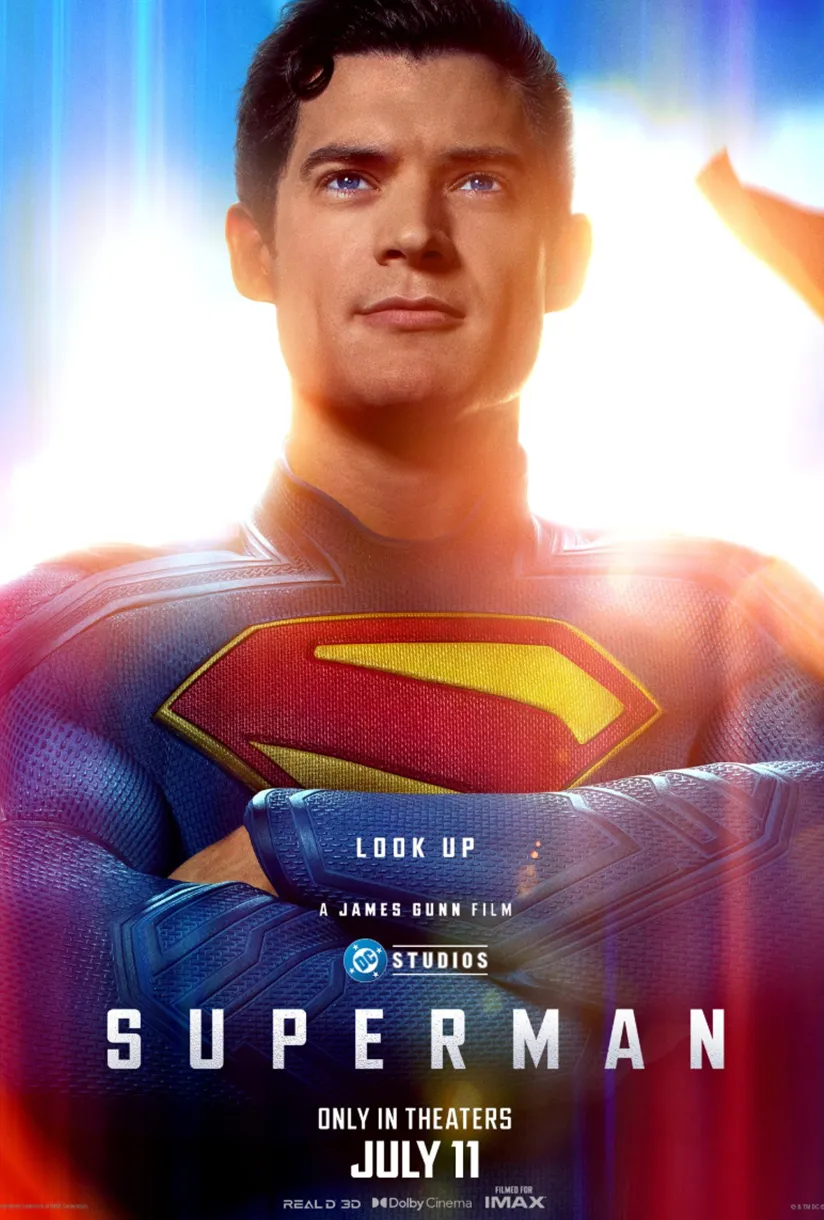
Official poster for Superman (2025) — DC Studios

SELECTED WORK / PRODUCTION

Superman

Studio
DC Studios
Released
July 10, 2025
SCANable role
3D Scanning
Director
James Gunn
  • CG
  • Environments
  • Feature Film
  • Props
  • Set Extension
  • VFX

Superman is DC Studios’ 2025 feature film directed by James Gunn, pairing ambitious visual effects with emotionally nuanced CG characters. The film’s VFX were both ambitious and disciplined — blending innovative on-set techniques, world-class digital artistry, and extended post-production to deliver fluid flight, immersive dread in its action sequences, and a polished, visceral cinematic experience true to Gunn’s vision.

SCANable provided prop scanning in support of the film’s visual effects, capturing high-resolution 3D data of key items so that accurate digital replicas could integrate seamlessly with the movie’s practical photography.


Prop scanning is a matching problem

A digital prop does not have to be beautiful. It has to be indistinguishable from the physical object sitting next to it in the previous shot.

That is a harder constraint than it sounds. The audience has already seen the real thing in camera — its exact proportions, its specific wear, the way light catches its surface. A CG replica that is close but not exact reads as wrong the moment the two are cut together.

The only reliable way to hit that bar is to measure the actual object rather than model it from reference photographs. Photogrammetric capture produces geometry derived from the prop itself, at a resolution that carries the manufacturing marks, paint chips, and surface irregularities that make a hero object feel real.

Capturing on the production’s schedule

Hero props are rarely available. They are in use on set, in the hands of a performer, or in the art department being repaired between units. The window to scan one is often measured in minutes between setups.

Working on location rather than requiring objects to be shipped to a facility is what makes that window usable. Our teams work where the show is — see set and location scanning for how the same principle applies to standing sets and environments.

Speed also protects the object. A hero prop is frequently a one-of-a-kind build with real cost behind it, and productions are understandably reluctant to let it leave the lot.

Why flight sequences need scanned assets

A film built around a character who flies is a film with an unusual proportion of shots where nothing practical is in frame. The performer is on a rig or a volume; the environment, and often the props they are carrying or wearing, must be reconstructed.

For those shots, the digital version of an object is not a substitute for the real one — it is the shot. Its accuracy directly determines whether a flight sequence reads as photographed or animated.

Scanned geometry also gives the layout and previs teams something measurable to plan against. Knowing the true dimensions of an object means a sequence can be blocked correctly before a single frame is rendered.

Surface, not just shape

Geometry answers where a thing is. Texture answers what it is made of, and it is usually the half that determines believability.

Cross-polarized capture separates diffuse color from specular response, so a modeler receives both the true surface color and a description of how that surface reflects. Metal, worn leather, and painted composite all behave differently under light, and an asset built without that information will look like plastic regardless of how accurate the shape is.

For assets that need to survive dramatic lighting changes across a sequence, our photometric and OLAT capture produces genuinely relightable results.

Delivered render-ready, not raw

Scan data went through in-house retopology, texturing, and render-ready asset builds before delivery — clean topology, sensible UVs, correct real-world scale, and naming that matched the production’s convention.

That last part matters more than it sounds on a film routing work through several facilities. An asset library that is internally consistent is one that vendors can actually share.

See more feature film scanning, or browse the full range of capture services.