← Back to all work
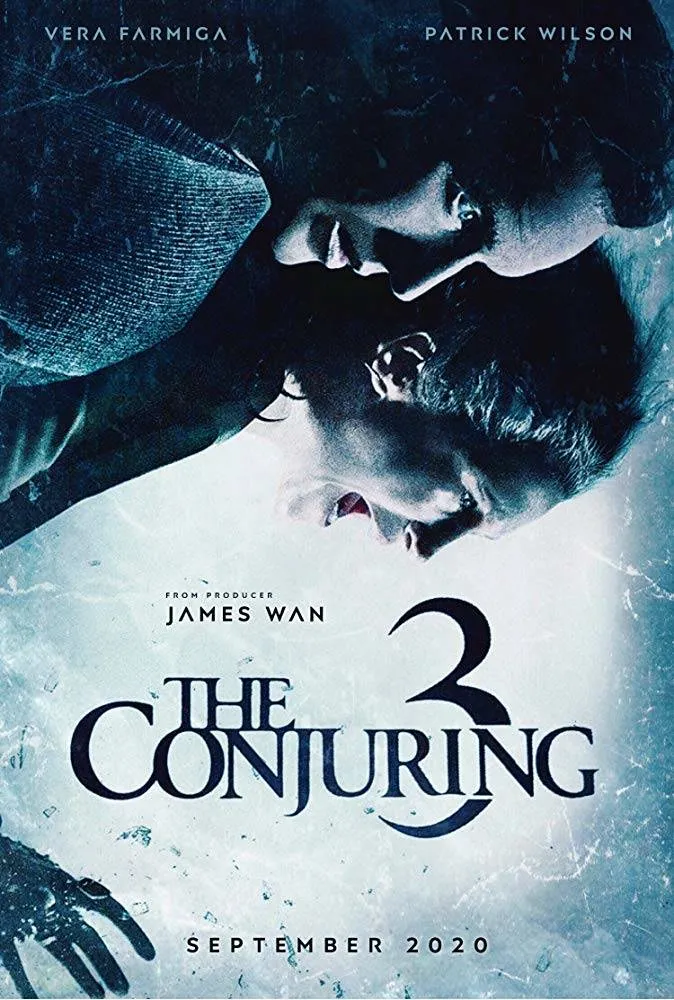
Official poster for The Conjuring 3 (2021) — Warner Bros.

SELECTED WORK / PRODUCTION

The Conjuring 3

Studio
Warner Bros.
Released
June 3, 2021
SCANable role
LiDAR/3D Scanning and Modeling
Director
Michael Chaves
  • Body Scanning
  • CG
  • Feature Film
  • VFX

The Conjuring 3 is Warner Bros.’ 2021 supernatural horror film starring Patrick Wilson and Vera Farmiga as paranormal investigators Ed and Lorraine Warren. Directed by Michael Chaves from a screenplay by David Leslie Johnson-McGoldrick, the sequel to The Conjuring (2013) and The Conjuring 2 (2016) is the seventh installment in the Conjuring Universe franchise, with James Wan and Peter Safran co-producing for New Line Cinema. The film premiered June 4, 2021.

SCANable performed 3D scanning and modeling for the feature film, including full-body scanning of talent in support of its computer-generated visual effects.

Digital work inside an otherwise real shot

Horror built on practical craft does not swap to CG for a whole shot. It uses digital work inside shots that are otherwise real — a limb that bends past its stop, a figure that persists a beat too long, a body that does something a body does not do.

That is the hardest arrangement for a digital element, because the comparison is not deferred. The practical version of the same subject is present in the same frame, under the same light, at the same distance from the lens.

Matching it is not an artistic exercise. It requires the digital version to have originated as a measurement of the practical one, so that proportion, mass, and surface all agree before anyone begins rendering.

The body is the subject the genre keeps returning to

Horror is unusually interested in human form, and unusually willing to break it. Whatever the effect, it starts from a correct baseline: a real performer, at their real proportions, recorded accurately.

A full-body scan provides that baseline. It fixes the true shape of the person before anything is done to it, which means every subsequent deformation is a departure from something the audience has already accepted as real.

Working the other way round — sculpting an approximate body and then distorting it — compounds two errors, and the result reads as a creature rather than as a person something is happening to.

Low light does not hide bad geometry

There is a persistent assumption that darkness is forgiving. In practice the opposite is true: low-key lighting throws hard, raking highlights across a subject, and a raking highlight is the most efficient way ever devised to expose a surface that is subtly the wrong shape.

Broad, even light flattens error. A single source at a steep angle finds every one of them, and horror is lit almost exclusively that way.

That is why capture accuracy matters more on this material, not less. Our arrays fire every camera at the same instant so there is no drift from breathing or micro-movement to soften the result — see cyberscanning for the method, and modeling for what ships after cleanup and retopology.

Browse more feature film projects, or see the full range of services.