SELECTED WORK / PRODUCTION
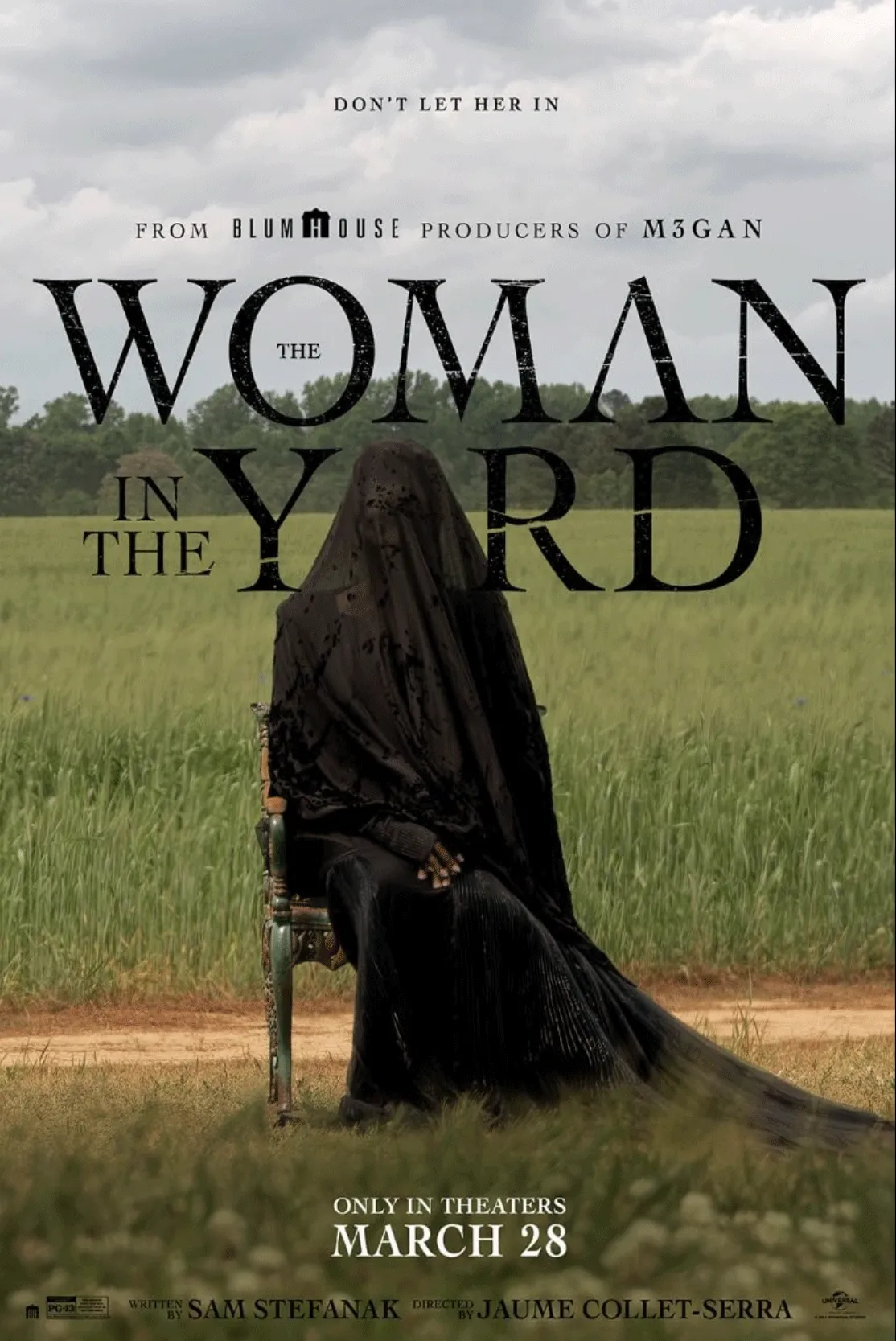
The Woman in the Yard
- Studio
- Universal Pictures
- Released
- March 27, 2025
- SCANable role
- 3D Scanning
- Director
- Jaume Collet-Serra
The Woman in the Yard is Universal Pictures’ 2025 thriller directed by Jaume Collet-Serra — a haunting tale where reality and the supernatural blur. Visual effects play a pivotal role in the film’s eerie atmosphere: ghostly apparitions, subtle environmental distortions, and the interplay of shadow, light, and ethereal imagery amplify the psychological tension, transforming an ordinary yard into a chilling stage for the unknown and making the mundane feel deeply unsettling.
SCANable provided environment capture for the production, recording the film’s locations as high-resolution LiDAR point-cloud data in support of its visual effects work.
An apparition has to occupy space
A figure that is added to a plate is not finished when it is composited over it. It has to sit in the scene — behind the porch rail, in front of the tree line, at a distance that agrees with its size on screen.
Every one of those relationships is geometric. Occlusion needs to know what is nearer than what. A cast shadow needs a surface with a real slope to fall across. A figure standing in grass needs the ground plane to be where the ground actually was.
Measured environment data supplies all of it at once. Without it, each relationship is solved by eye, shot by shot, and each solution is an opportunity to be slightly wrong.
Most scan data is reference, not hero geometry
There is an assumption that scanning exists to produce beautiful assets. On a film like this, most of it produces something less visible and more useful: a dimensionally accurate description of where things were.
That description is what a compositor uses to place a figure, what a lighter uses to match a practical key, and what a layout artist uses to work out how far the camera actually was from the house.
Reference is not a lesser deliverable. It is the deliverable that most of the shots quietly depend on, and it is invisible when it works. Our set and location scanning is built around producing it.
Measured points, not a model
A point cloud is a set of measured points in space, each with a real coordinate. It is not a model, and it does not need to be one to be valuable.
Departments consume it in different states. Layout and tracking often work directly with the raw registered cloud. Modeling wants a decimated mesh built from it. Lighting frequently wants nothing more than accurate distances.
Delivering the right form to each department is part of the work, and where a mesh is required it goes through cleanup and render-ready preparation before it ships.
Capture wider than the shot list
Shot lists change. Sequences get added in the edit, a plate gets reframed, and a shot that was never going to need visual effects suddenly does.
Scanning only what the current list calls for is a false economy, because the marginal cost of additional coverage during a capture session is small and the cost of returning to a location is not. Broad coverage taken once is what keeps late additions from becoming problems.
See more of our film scanning work, or read about how productions use us.
SELECTED WORK / GALLERY