

SELECTED WORK / PRODUCTION
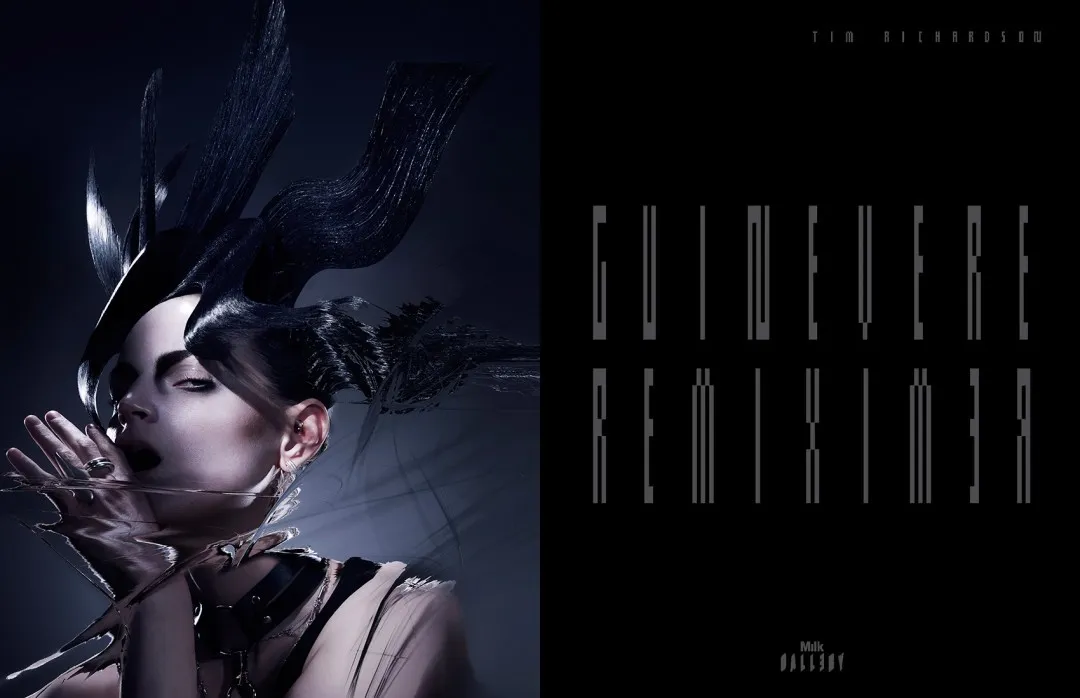
Tim Richardson – Spiritual Machine
- Released
- July 24, 2015
- SCANable role
- 3D Imaging
Spiritual Machine is photographer Tim Richardson’s book exploring fashion, futurism, and the coexistence of human spirit and technology. Drawing on roughly five years of work for clients including Estée Lauder, Bergdorf Goodman, Givenchy, Lady Gaga, NARS, Nike, and Lexus, Richardson combined motion capture, 3D scanning, and 3D imaging to create film and photographs that feel otherworldly yet reassuringly human. His personally selected subjects — Academy Award-nominated actress Rinko Kikuchi, models Guinevere Van Seenus and Tao Okamoto, and model/musician Brooke Candy — bring a powerful, feminine energy to each portrait.
For this project, SCANable provided high-resolution 3D laser scans of model Guinevere Van Seenus, delivering full-body scan data that Richardson wove into the book’s blend of photography and digital artistry.
Measured, not sculpted
A digital figure can be modelled from photographs. It takes a skilled artist, and in isolation it can look convincing.
What it does not do is survive comparison. Put a sculpted body beside a photograph of the same person and the eye finds the difference immediately — proportion drifts, the shoulder-to-hip relationship shifts, and the small asymmetries every real body carries get quietly tidied away.
A 3D scan is a measurement instead of an interpretation. The proportions are not a judgement call, which is precisely why the result reads as a specific person rather than as a figure study.
Stillness is the hard part
Human subjects cannot hold still. Breathing alone moves the ribcage several millimetres, and any method that sweeps across a body or takes sequential passes records those millimetres as error.
The fix is not better cleanup. It is capturing every angle in the same instant, so there is no interval for the subject to move within. Simultaneous array capture is why a CyberSCAN™ of a person stays sharp where hand-corrected data goes soft.
Softness in scan data always lands in the same places — the jawline, the collarbones, the hands. Those are the places a viewer looks first.
The scan outlasts the shoot
A book, a film, a campaign: each one finishes and closes. The scan data does not.
Measured geometry of a person at a specific moment stays useful long after the project that funded it has wrapped — for a reprint, a new edition, an exhibition, a piece of work nobody has proposed yet. It is the rare deliverable that appreciates.
Treating capture as an archival act rather than a shot-specific expense tends to return more than it costs. Our Mobile CyberSCAN Studios deploy to wherever the work is happening, so acquiring that record takes a session rather than a schedule.
More art and fashion projects is in the portfolio, and the full service list covers the rest.
SELECTED WORK / GALLERY