

SELECTED WORK / PRODUCTION
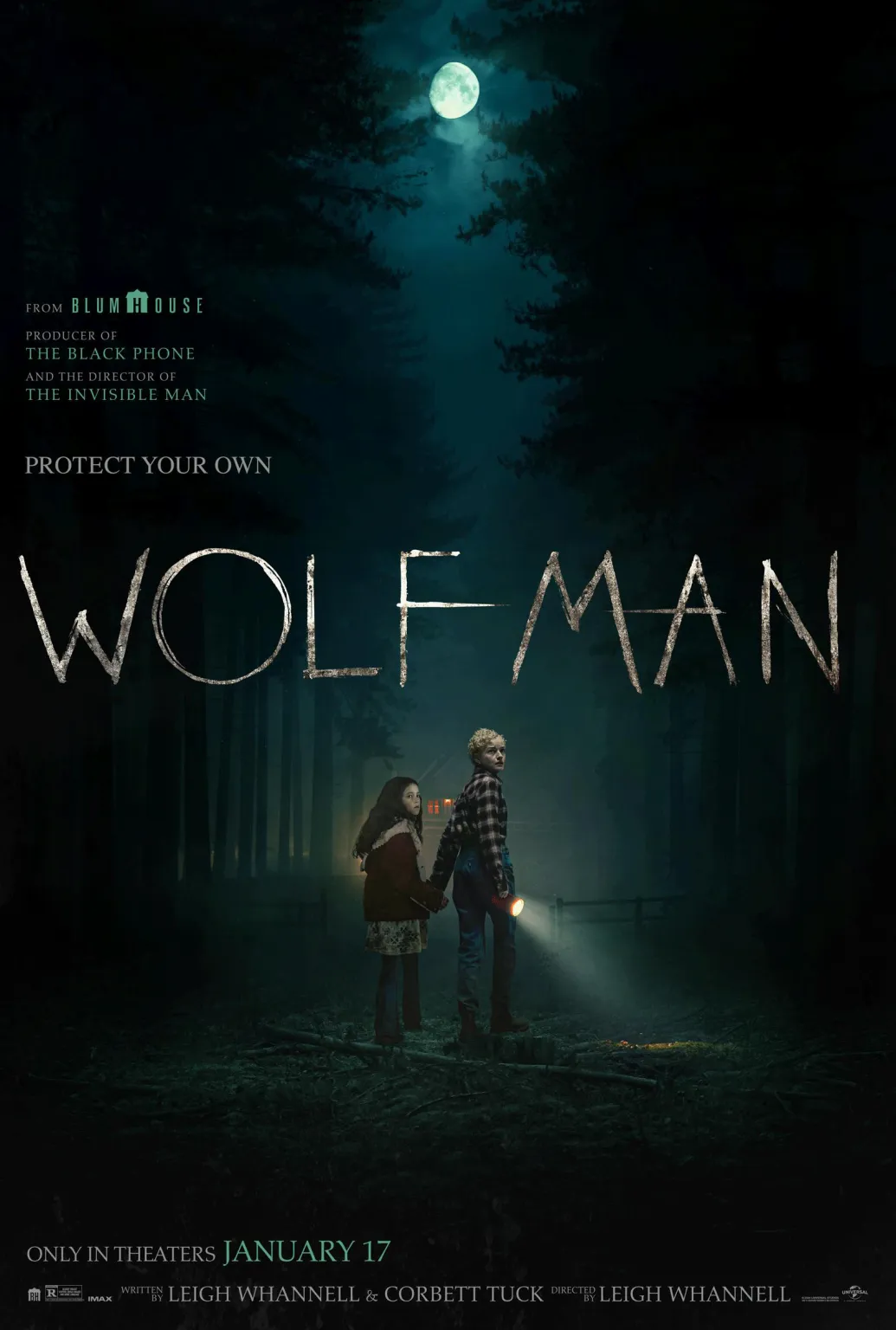
Wolf Man
- Studio
- Blumhouse Productions
- Released
- January 16, 2025
- SCANable role
- 3D Scanning
- Director
- Leigh Whannell
Wolf Man is Blumhouse’s 2025 horror film directed by Leigh Whannell — a reboot of The Wolf Man (1941) starring Christopher Abbott and Julia Garner. Co-written by Whannell and Corbett Tuck and also starring Sam Jaeger, the film was first announced in 2014 as part of Universal’s Dark Universe before the studio shifted to standalone films following The Mummy (2017). The success of Whannell’s The Invisible Man (2020) rekindled interest in the Monsters franchise, and after Ryan Gosling’s pitch and Derek Cianfrance’s departure, Whannell took over as director in 2023, with principal photography in New Zealand in early 2024. Universal Pictures released the film in the United States on January 17, 2025.
SCANable provided 3D scanning for the production, capturing high-resolution character data — full-body and facial capture — in support of the film’s visual effects, including its face replacement work.
Measured beats sculpted, every time
A modeler working from photographs is performing a skilled act of inference. Lens distortion, foreshortening, and the lighting of the reference stills all have to be reasoned away before the underlying shape can be estimated.
A scan does not estimate. It records dimensions. The distance between two points on a performer’s face is whatever it measured, not whatever it looked like from where the camera stood.
On character work that difference is the whole game, because likeness lives in millimeters of asymmetry that nobody can name and everybody can see. Photogrammetric capture through our CyberSCAN™ arrays gives the modeling department a truth to build against instead of a puzzle to solve.
A transformation still starts with a real body
Creature work reads as physical when it is anchored in anatomy that is genuinely human. The audience is being asked to believe that a person is becoming something else, which only lands if the starting point is unmistakably that person.
Scan data provides the anatomical baseline: real proportions, real musculature, real posture. A creature build that deforms outward from measured human geometry keeps a plausible skeleton underneath it, even when the silhouette has changed considerably.
Sculpting the end state without that foundation can look good in isolation and still fail to read as the same character in a cut.
Prosthetics have to be captured as they exist on the day
Practical makeup and appliances change a performer’s shape and surface. Once they are applied, the person in front of the camera is not the same subject that was scanned clean.
Capturing a made-up look means recording it in the state the film will actually show — applied, blended, and lit. Appliance edges, the transition to real skin, the way silicone takes light: all of it matters to whatever gets built or extended digitally afterward.
Separating diffuse and specular response matters here, because prosthetic surfaces and skin behave differently under a relight.
What the VFX vendor receives
Character capture becomes useful the moment it is in a form an artist can pick up. That means clean topology suited to deformation, a UV layout that supports texture work, correct real-world scale, and consistent naming.
Digital doubles and creature bases both leave here after retopology and render-ready builds, so the work that arrives is ready to be rigged rather than ready to be repaired.
More feature film scanning is in the portfolio.
SELECTED WORK / GALLERY