

← Back to all work
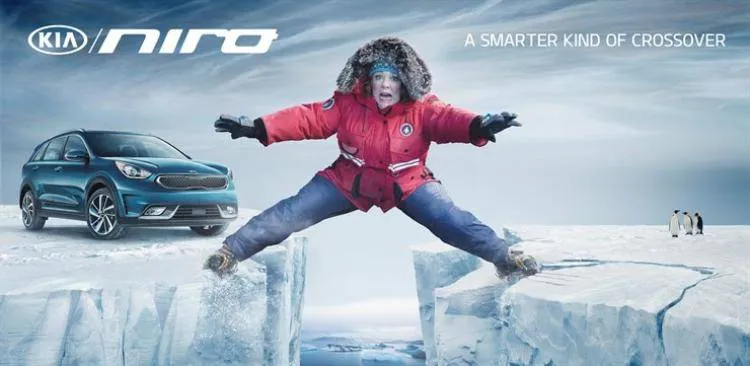
Poster for Kia’s “Hero’s Journey” Super Bowl 51 commercial (2017) starring Melissa McCarthy — MJZ

SELECTED WORK / PRODUCTION

2017 Kia Niro “Hero’s Journey” Starring Melissa McCarthy Super Bowl 51 Commercial

Studio
MJZ
Released
February 4, 2017
SCANable role
3D Body, Facial Expressions and Set Scanning
Director
Matthijs van Heijningen
VFX vendor
The Mill
  • Animation
  • Beauty
  • Body Scanning
  • CG
  • Camera Tracking
  • Commercial/Advert
  • Crowd Placement
  • Environments
  • Props
  • Super Bowl Ads
  • VFX

Kia’s “Hero’s Journey” is the 2017 Super Bowl 51 commercial starring Melissa McCarthy as a would-be eco-hero saving the planet in the Kia Niro. Directed by Matthijs van Heijningen for MJZ with visual effects by The Mill, the spot sends McCarthy racing to rescue whales, trees, ice caps and rhinos — with hilariously disastrous results. She is launched into the side of a ship, chopped down mid-tree-hug, plunged into an icy ocean and trampled by stampeding rhinos, yet her hero spirit never wavers. A for effort!

SCANable captured 3D body scans and facial expression scans of Melissa McCarthy in three different outfits, along with 3D scans of the iceberg set and full body scans of two extras. These photogrammetry-based digital doubles and set assets supported The Mill’s VFX work on the commercial’s stunt-heavy sequences.

The shots nobody can actually perform

Comedy built on physical abuse creates a specific production problem. The gag requires the star to be hit by a ship, dropped into freezing water, or run over by animals, and none of those are things a performer can be put through.

The performance still has to be hers. A generic stunt figure standing in at distance is not funny, because the joke depends on recognising who it is happening to and reading the expression on the way down.

That is the case for an accurate digital double rather than a substitution. Measured geometry and a captured range of facial expressions give animators a version of the performer that can be thrown around and still register as the performer.

Wardrobe is geometry before it is texture

Clothing is often treated as a surface applied to a body. It is not. A jacket changes silhouette, adds volume at the shoulder, breaks the line of the arm and behaves differently in motion from the body underneath it.

Scanning a performer in each costume produces a separate asset per look, with the real drape, the real thickness and the real fit. Simulating those differences from a single nude-scan base is a great deal of work that produces a worse result than simply capturing what wardrobe built.

Multiple costume changes in a single session is a scheduling problem, which is why our Mobile CyberSCAN™ Studios go to the shoot rather than the other way round.

The set the double has to land in

A digital performer needs somewhere to make contact. Ice, deck, ground — whatever the gag ends on has to exist as geometry, or the impact will not read and the shadow will land in the wrong place.

Capturing the practical set alongside the performer means both halves of the shot share one coordinate space from the start. Everything is delivered after retopology and render-ready modeling, at real-world scale, ready to hand to the VFX vendor.

See more commercial work, or browse the full service range.