SELECTED WORK / PRODUCTION
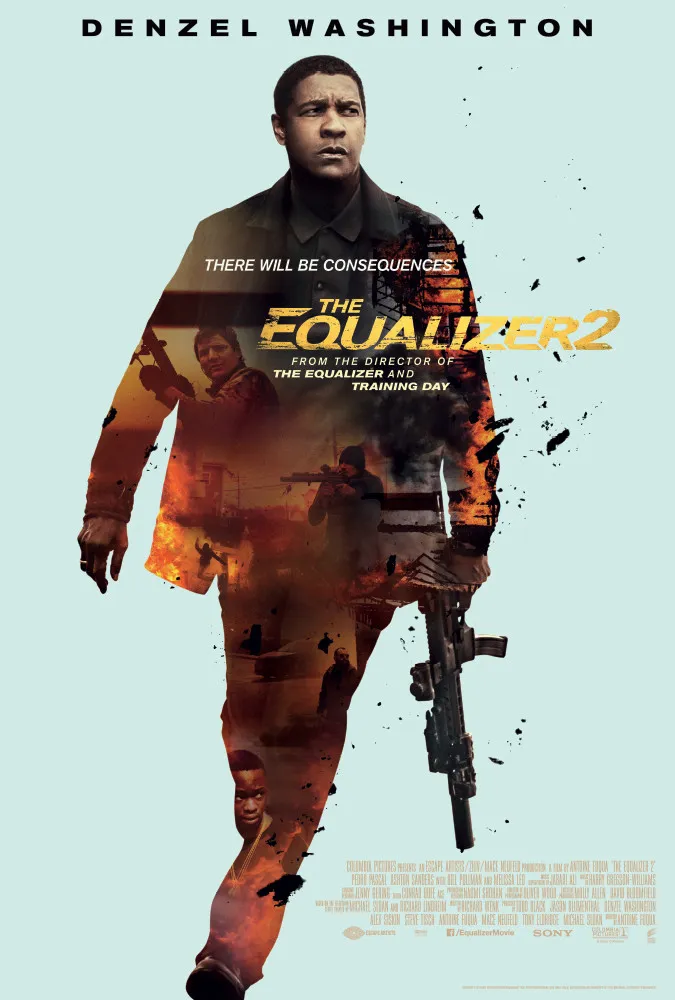
The Equalizer 2
- Studio
- Columbia Pictures
- Released
- July 19, 2018
- SCANable role
- LiDAR/3D Scanning and Modeling
- Director
- Antoine Fuqua
The Equalizer 2 is the feature film sequel to The Equalizer, released in theaters in July 2018. The production once again called on precise digital capture of its real-world locations and elements to support the film’s visual effects work.
SCANable supported the production with LiDAR set scanning and 3D scanning services along with 3D modelling, capturing accurate point cloud data and delivering production-ready digital assets. This photogrammetry-driven workflow gave the visual effects team reliable reference geometry and spatial reference for integrating CG elements seamlessly into the finished film.

Places a camera cannot go
Action sequences routinely call for viewpoints no camera ever occupied: through a wall, from mid-air, from inside a structure while it comes apart.
Those shots are photographed for the parts a camera can reach and built for the parts it cannot. The build only cuts against the photography if it shares the real geometry — the same room, the same distances, the same relationship between one surface and another.
That geometry comes from set and location scanning, captured while the location is still standing and still dressed.
Reference data and hero assets are different jobs
Not every scan becomes something the audience looks at. A large share of what a production commissions is reference: geometry a visual effects team uses to place, scale, track, or light something else.
Reference work is unglamorous and disproportionately valuable. It answers the questions an artist would otherwise have to guess at — how far is that wall, how high is that ledge, what shape is the ground here — without a return trip to a location that has moved on.
It is also cheap on the day and impossible afterwards, which is the entire argument for doing it.
Simulation needs something to simulate
Destruction, water, smoke, and debris are computed against a scene. If the scene is approximate, the simulation is approximate in ways an audience reads as wrong without being able to say why.
A measured environment gives an effects team real surfaces to collide against and real volumes to fill. The result behaves correctly at the boundaries, which is where a simulation is actually judged.
Sequences get planned in the scanned space
Scan data is not only a post deliverable. A measured environment is somewhere a sequence can be laid out before it is shot — camera positions tested against real sightlines, coverage checked against real distances.
That is the same geometry the virtual production pipeline runs on, and it means the plan and the finished shot share a single source of truth. Everything ships after retopology and render-ready builds.
Browse more feature film work, or see the full service list.
SELECTED WORK / GALLERY