

← Back to all work
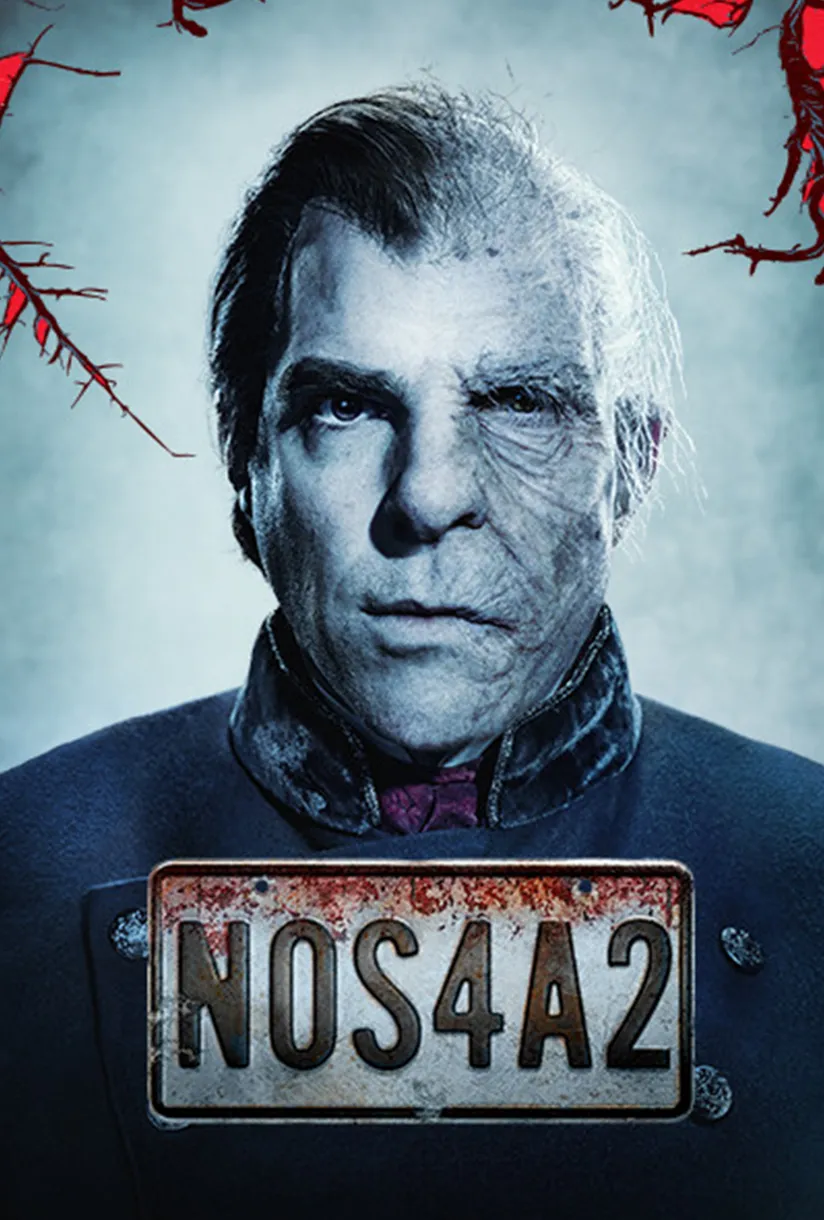
Official poster for NOS4A2 (2019), AMC’s supernatural horror series based on Joe Hill’s novel

SELECTED WORK / PRODUCTION

NOS4A2

Studio
AMC
Released
June 1, 2019
SCANable role
LiDAR/3D Scanning and Modeling
  • Body Scanning
  • Television
  • VFX

NOS4A2 (pronounced “Nosferatu”) is AMC’s supernatural horror drama series based on Joe Hill’s novel, which premiered on June 2, 2019. Created by Jami O’Brien, the series stars Ashleigh Cummings, Zachary Quinto, Olafur Darri Olafsson, Virginia Kull and Ebon Moss-Bachrach. It follows Victoria “Vic” McQueen, a young working-class artist who discovers she has a supernatural ability to track the seemingly immortal Charlie Manx — a predator who feeds off the souls of children, then deposits what remains of them in Christmasland, a twisted village of his imagination where every day is Christmas and unhappiness is against the law. Vic must defeat Manx and rescue his victims without losing her mind or falling victim to him herself.

SCANable performed 3D scans of major characters and sets, including full-body scanning of Zachary Quinto in various stages of makeup and prosthetics, giving the show’s VFX team accurate digital doubles and environment data.

A character with more than one face

A character whose appearance changes across a story is not one asset. Each distinct look is its own state, with its own geometry, and the transitions between them are only convincing if the endpoints are real.

That makes the capture plan a scheduling problem: the look has to be scanned while it exists, in the state it exists in, before the makeup department moves on to the next one. Interpolating between two states is reasonable. Inventing one because it was never recorded is not.

Captured discretely, each stage becomes a fixed reference the visual effects team can move between, rather than a single asset being pushed further than it was ever measured to go.

Places that exist only in someone’s head

A story world with no physical counterpart still has to obey physical rules. An imagined village where the light, the architecture, and the scale are invented is more demanding than a real location, not less, because there is nothing to check it against except its own internal consistency.

What grounds it is the practical material it is built out of. Standing sets and constructed pieces, scanned, provide the measured core; everything extended beyond them inherits real dimensions and real proportion, so the invented parts of the environment behave like architecture rather than like illustration.

That is the argument for measuring the practical build even when the finished world is entirely fictional. Our set and location scanning supplies that core.

The scan outlives the season

Series work has a long tail. A show that returns needs assets that still match, a show that ends may need pickups months later, and marketing, licensing, and post departments all draw on the same data long after the unit has wrapped.

A registered point cloud and a set of clean character meshes are durable records. They do not degrade, they do not depend on anyone remembering how something looked, and they can be reopened by a different vendor in a later season without a fresh capture.

Delivered through retopology and render-ready preparation, the assets stay usable rather than becoming an archive nobody can open. See digital doubles for what the character work produces.

See more television work, or the complete list of services.