

← Back to all work
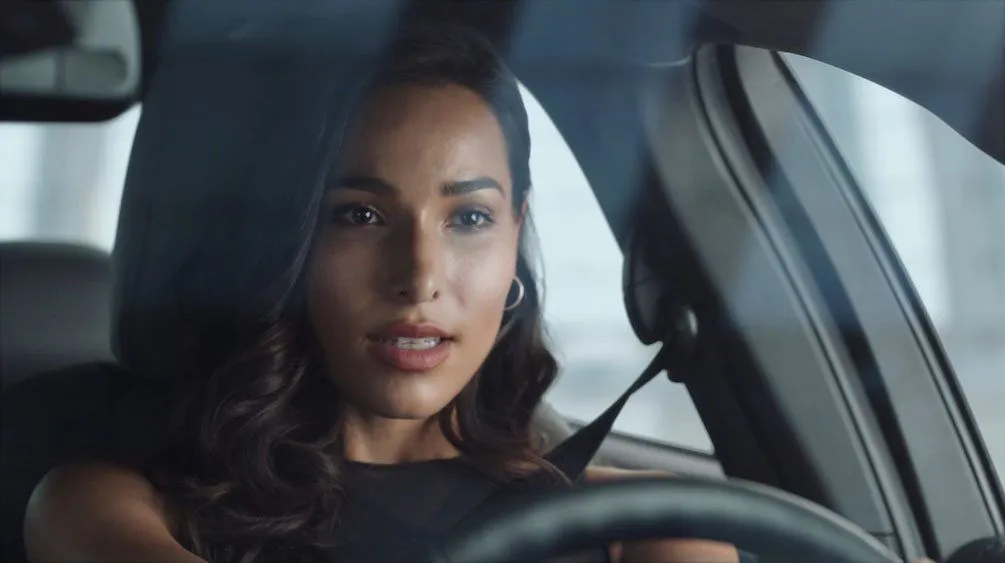
Poster for the Ford Fusion ‘Instincts’ commercial (2016) — Mill+

SELECTED WORK / PRODUCTION

Ford Fusion ‘Instincts’

Studio
Mill+
Released
August 16, 2016
SCANable role
3D Scanning
Director
Jeffrey Dates
VFX vendor
The Mill
  • Body Scanning
  • CG
  • Commercial/Advert
  • Particles
  • VFX

‘Instincts’ is Ford’s 2016 Fusion commercial from Mill+ and Zubi Advertising, directed by Jeffrey Dates and built around striking CG visuals — including a photo-real CGI car. The Mill’s 3D team worked closely under Dates’ direction to craft a series of visuals representing the driver’s instincts, such as butterflies, goose bumps and flowing hair, with each transition offering an opportunity to change the color of the car. As Dates put it, “it was really important that the emotion of the driver be represented while connecting with the Fusion experience. The thrill and excitement of driving a Ford Fusion can be seen as she feels butterflies as she anticipates driving the car.”

SCANable performed a full 3D body scan of model and actress Stephanie Cordoba, delivering photogrammetry-based digital double data that supported The Mill’s CG work on the spot.

Effects need a surface to grow from

Butterflies, goose bumps, and flowing hair are all effects that happen on or around a body. They are simulated, emitted, and constrained against geometry, and the quality of the result depends entirely on the quality of that geometry.

A particle system driven by an approximate body produces emission in slightly the wrong places and collisions that do not quite land. A measured surface gives the simulation a real form to respect — the actual curve of a shoulder, the actual line of an arm — so the effect appears to belong to the performer rather than to hover near her.

Fabric captured as shape

Fabric on a scanned performer is captured as shape. Every fold, seam, and drape is where it actually fell, held by the body actually wearing it.

Rebuilding that later means simulating cloth onto an approximate figure and art-directing it until it looks plausible, which is slower and never quite matches the plate. Capturing the performer dressed as the spot requires means the digital version starts already correct. Our Mobile CyberSCAN™ Studios deploy to the shoot for exactly that reason, so talent is scanned in wardrobe rather than out of it.

One capture, several downstream assets

A full-body scan is rarely used only once. The same data becomes a collision surface for simulation, a stand-in for lighting and lens tests, a reference for animation, and a hero digital double when a shot needs one.

That is why the capture is made complete rather than tuned to the shot list as it stood on the day. Boards change between the shoot and the final grade, and a complete asset absorbs those changes without anyone going back to the performer.

Photoreal cars set the bar for everything beside them

A spot built around a photo-real CG vehicle establishes a level of finish the rest of the frame has to meet. Once an audience accepts the car, anything softer next to it becomes the thing they notice.

That is the practical argument for measuring the human elements to the same standard as the hardware. Everything ships after retopology, UV layout, and render-ready preparation, scaled and named to the vendor’s specification.

Browse more commercial and advertising work, or see everything we offer.