

← Back to all work
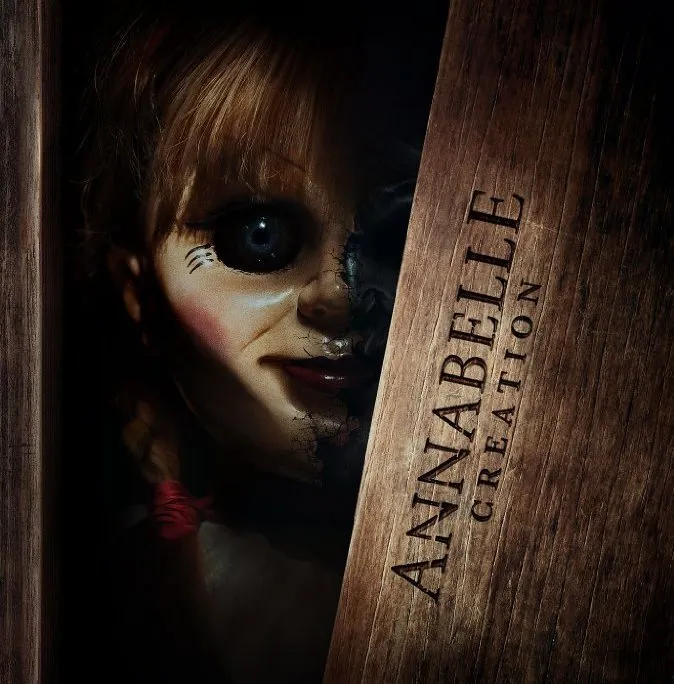
Official poster for Annabelle: Creation (2017), directed by David F. Sandberg

SELECTED WORK / PRODUCTION

Annabelle: Creation

Studio
Warner Bros. Pictures
Released
August 10, 2017
SCANable role
LiDAR, 3D Body Scanning and Modeling
Director
David F. Sandberg
VFX vendor
Shade VFX
  • Beauty
  • Body Scanning
  • CG
  • Camera Tracking
  • Environments
  • Face Replacement
  • Feature Film
  • VFX

Annabelle: Creation is the 2017 horror film revealing the beginnings of the possessed doll Annabelle, which opened in theaters on August 11, 2017. Several years after the tragic death of their little girl, a dollmaker and his wife welcome a nun and several girls from a shuttered orphanage into their home — soon becoming the target of the dollmaker’s possessed creation. David F. Sandberg (Lights Out) directs from a screenplay by Gary Dauberman, who also wrote Annabelle. Produced by Peter Safran and James Wan, the film stars Stephanie Sigman, Talitha Bateman, Lulu Wilson, Philippa Anne Coulthard, Grace Fulton, Lou Lou Safran, Samara Lee and Tayler Buck, with Anthony LaPaglia and Miranda Otto.

SCANable performed 3D scans of Anthony LaPaglia and Talitha Bateman, along with LiDAR scanning of the home’s exterior at Big Sky Movie Ranch in Simi Valley, California — providing full-body scan and environment capture data to support Shade VFX’s work on the film.

A practical genre with digital seams

Horror is largely a practical genre. The house is real, the props are built, the effects are staged in camera wherever they can be, and the digital work exists to extend what was physically there rather than to replace it.

That is the hardest kind of integration, because the audience is looking at the real thing and the added thing simultaneously. There is no fully synthetic shot to establish its own rules — every digital element is being directly compared to measured reality standing right next to it.

Scanning the practical build first means the added element is derived from the same geometry the camera photographed. It is the difference between matching a house and continuing one. Our set and location scanning supplies that foundation.

Horror lets the audience look

Action cinema protects imperfect work with speed. Horror does the opposite: it holds a wide shot, keeps the camera slow, and invites the viewer to search the frame for something wrong.

Under that kind of scrutiny a solve has to stay locked for the length of the take, and anything composited into the shot has to remain correct as the camera moves through parallax. Both requirements are much easier to meet when the tracking team has the real dimensions of the room rather than a reconstruction inferred from the plate alone.

Scanning a house you did not build

A period exterior standing on a ranch is a found object. Nobody has a model of it, the original drawings do not describe what is there now, and the production will be finished with it in a matter of weeks.

Capturing it produces the only accurate record that will ever exist — roofline, porch geometry, window placement, ground grade — and that record serves environment work, digital extensions and reference for months afterwards.

Performer capture runs on the same principle. Every camera in the array fires simultaneously, which is what CyberSCAN™ does, and the resulting digital doubles hold likeness without the softening that multi-pass methods introduce.

Explore more feature film projects, or see the complete service list.