

← Back to all work
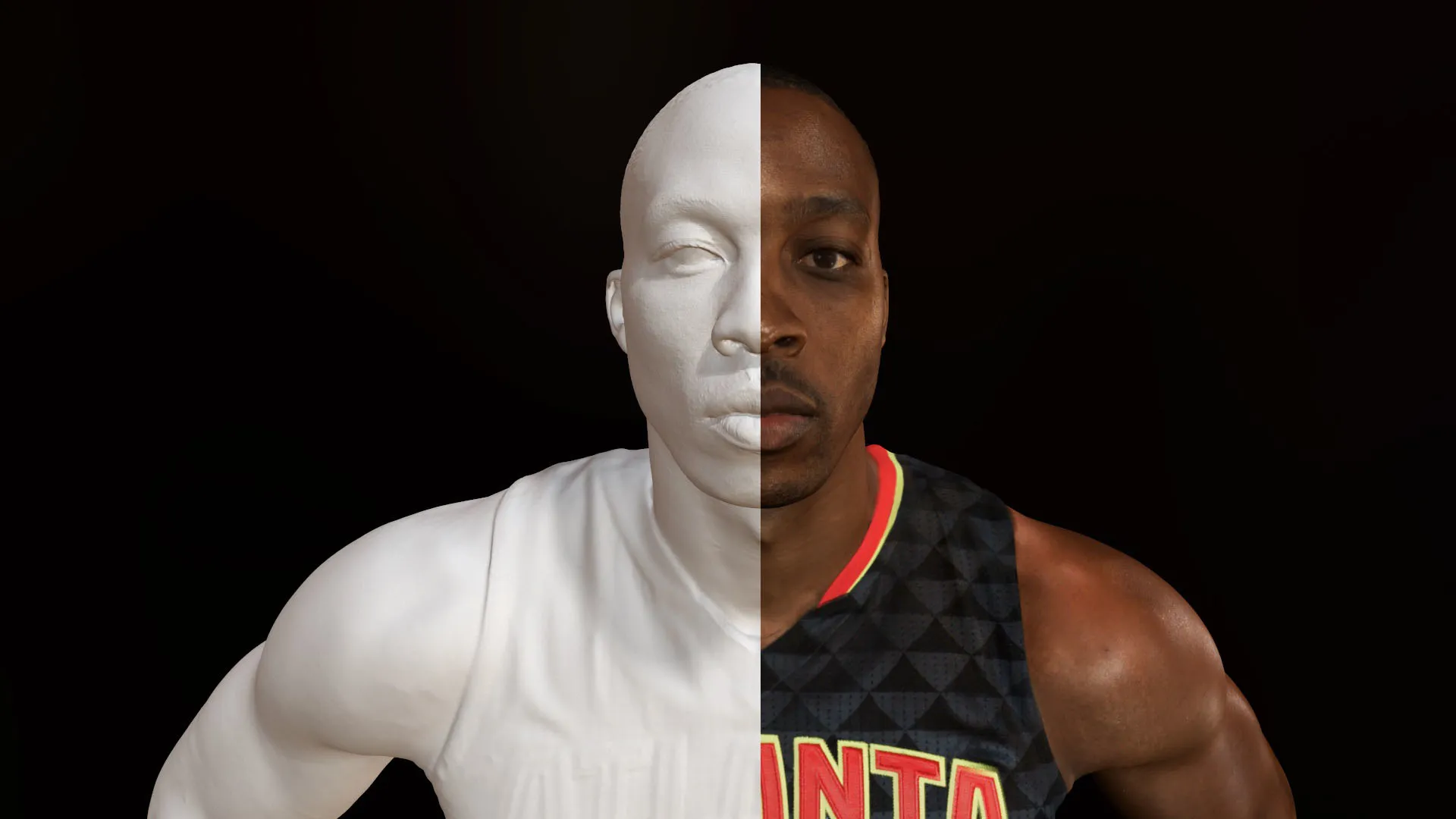
Atlanta Hawks 3D court projection intro featuring digital doubles of the 2016–17 roster

SELECTED WORK / PRODUCTION

Atlanta Hawks Incorporate 3D Body Scanning Into Latest Court Projection Video

Released
November 7, 2016
SCANable role
3D Scanning and Retopology
  • 3D Projection
  • Animation
  • Body Scanning
  • CG
  • Retopology
  • VFX

The Atlanta Hawks became the first NBA organization to feature true 3D digital doubles of every player in their court projection intro for the 2016–17 season. Produced by Quince Imaging at Philips Arena using eight 26,000-lumen Barco projectors, the projection-mapping show transforms the court into a surreal visual feast of player images, cityscapes and animated graphics, with layered projection creating the illusion of tiles dropping away beneath the players’ feet.

Working with The Famous Group and director Lauren Fisher, SCANable captured 3D cyber-scans of the roster during the Hawks’ press day in Atlanta, Georgia — Dwight Howard, Dennis Schroder, Kent Bazemore, Kyle Korver, Paul Millsap, Tim Hardaway Jr., Mike Scott, Mike Muscala, Kris Humphries, Jarrett Jack, Deandre Bembry, Thabo Sefalosha, Tiago Splitter, Malcolm Delaney and Edy Tavares. The team captured “hero” poses of each player and action poses of the starters, and the retopologized 3D body scans became the digital doubles seen in the final court projection sequence.

Projection content is judged from distances nobody controls

A court projection show is watched from the upper bowl, from courtside, and through the broadcast camera at the same time. There is no single framing to optimise for.

Digital doubles built for that context have to hold at every one of those distances. Silhouette, proportion, and stance carry the read from the stands; surface detail carries it on the broadcast feed. Measured full-body scans supply both, because the same data serves the wide view and the close one.

Athletes are captured in a window nobody gets twice

Media day is a fixed block with a full roster moving through it. There is no coming back for a second attempt.

Simultaneous array capture is what makes that workable. Every camera fires at the same instant, so a player holds a pose for a fraction of a second rather than standing still through a sweep. Breathing, weight shift, and micro-movement never enter the data in the first place. Our Mobile CyberSCAN™ Studios travel to the venue, so capture fits inside a schedule the organisation already set.

Topology decides whether a scan can move

A raw scan is dense, unstructured geometry. It is an accurate record of a person and a poor thing to animate.

Retopology rebuilds that surface as clean quads with edge flow that follows the anatomy — loops around joints, density where deformation happens, and nothing wasted where it does not. That is the difference between a model that holds a pose and one that can take a new one. Retopology, UV layout, and render-ready builds are the step that turns capture into an asset.

Hero poses and action poses answer different questions

A hero pose is a neutral, well-understood starting point — the version that gets rigged and reused.

An action pose is a record of how one specific body actually holds one specific motion. Real athletes distribute weight in ways that are difficult to key by hand, and capturing the pose instead of approximating it keeps that signature intact.

Both are digital doubles. They simply enter the build at different points.

See more sports and broadcast work, or read through the full service list.