

← Back to all work
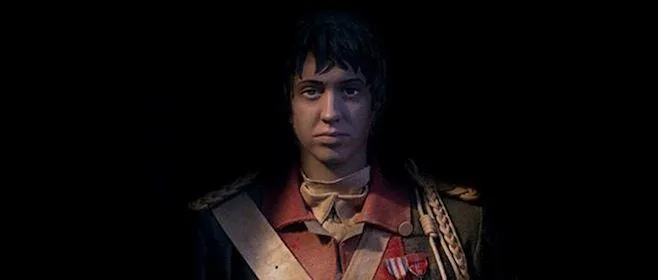
Still from Daft Punk’s “Instant Crush” music video (2013) featuring Julian Casablancas

SELECTED WORK / PRODUCTION

Daft Punk Music Video ft. Julian Casablancas – Instant Crush

Released
December 5, 2013
SCANable role
Cyber Scanning
Director
Warren Fu
  • Body Scanning
  • Music Video

Daft Punk’s “Instant Crush” music video, featuring Julian Casablancas, is a 2013 film directed by Warren Fu and produced by Daft Arts. Tony Gardner and Alterian, Inc. designed the video’s character effects and created its statues from wax and fiberglass — the same team behind Daft Punk’s robot helmets, which make a brief appearance. Shot in a 4:3, film-like style, the video tells the love story of two wax figures in an exhibition hall: a French soldier resembling Casablancas and a female peasant displayed across from him, who fall beside each other and hold hands as they melt in a storage-room fire. Inspired by Hans Christian Andersen’s “The Steadfast Tin Soldier” and The Twilight Zone, it premiered on Vevo on December 6, 2013, a day after clips debuted on French news channel BFM TV, and the single charted internationally following the release of Random Access Memories.

SCANable provided cyberscanning for the production, delivering high-resolution 3D body scans in support of the video’s character effects work.

Measured geometry versus sculpted from reference

A likeness can be sculpted from photographs. It has been done for a very long time, and a good sculptor gets close.

The difficulty is that photographs flatten. Lens choice, subject distance, and lighting all deform apparent proportion, and an artist working from them is reconstructing three dimensions from an ambiguous source. Small errors accumulate exactly where people are most sensitive: the set of the eyes, the width across the cheekbones, the depth of the nose from the face.

A scan removes the ambiguity. It is a measurement of the actual head at actual scale, which is the whole premise of cyberscanning — and anything built afterwards, practical or digital, starts from a shape that is already right.

When character effects change the subject

Prosthetics, appliances, and heavy makeup are not additions to a face. They are a different face, with different volume and a distinct edge where material meets skin.

Capture intended to support that work has to happen in the state the camera will see, because the bare head and the made-up head are two different measurements and neither substitutes for the other.

That is a scheduling question as much as a technical one. On-set scanning exists so capture can happen where the makeup is applied, in the window between application and the first setup, rather than on another day in another building.

Likeness at rest and likeness in performance

A scan is a single instant. A performance is not.

That gap is the real work in character effects and digital-double pipelines. A captured head is neutral, and everything an audience actually watches — expression, tension, the asymmetry a face takes on under emotion — has to be driven on top of it.

Which is why the neutral capture has to be genuinely neutral and genuinely accurate. A base that already carries half an expression pushes every shape built from it away from the performer. 4D capture extends the same principle into time, recording deformation across a performance instead of a single pose.

See more music video and character work, or the full service list.