

← Back to all work
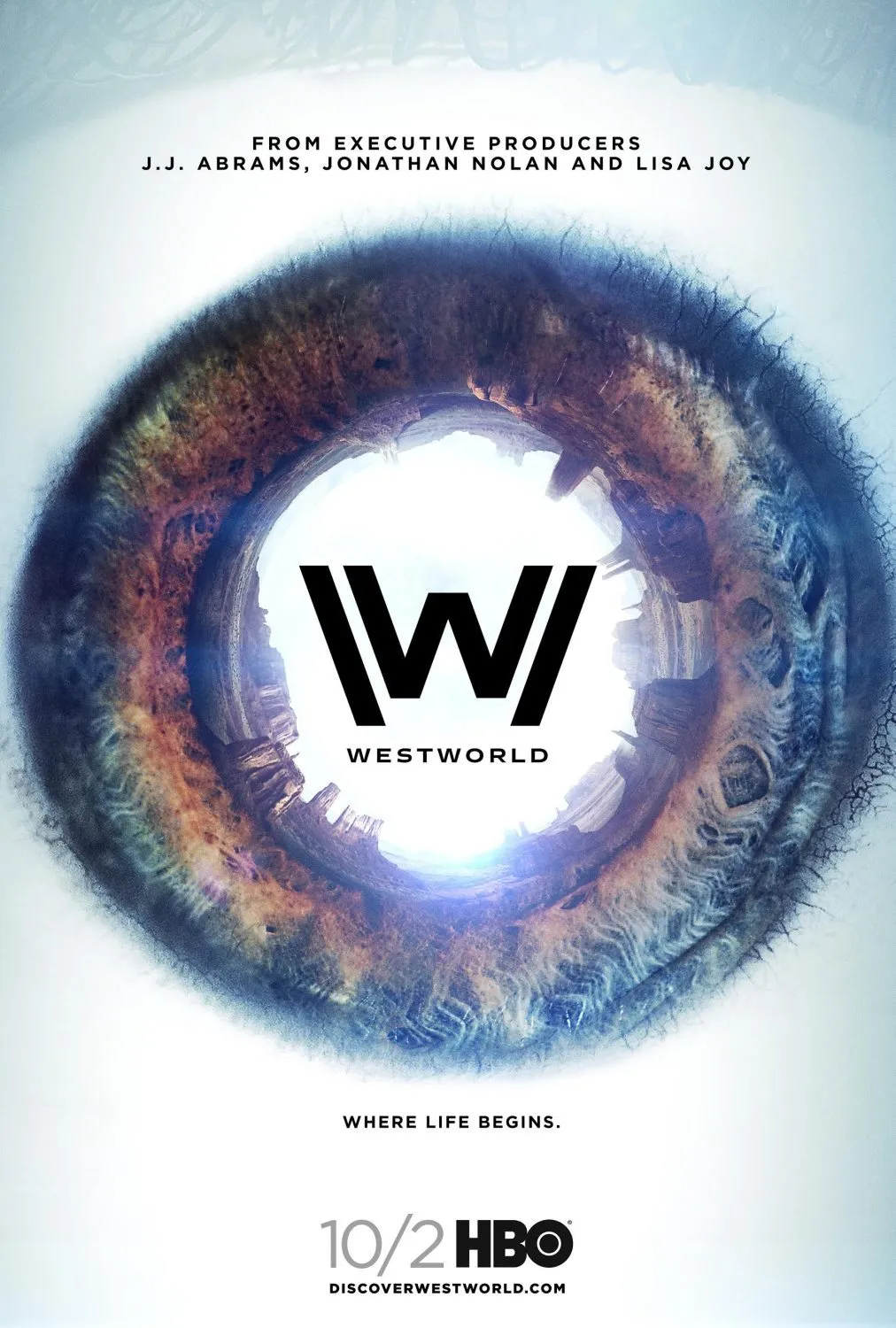
Key art for HBO’s Westworld — Bad Robot Productions drama about artificial consciousness

SELECTED WORK / PRODUCTION

HBO ‘Westworld’

Studio
Bad Robot Productions
Released
October 1, 2016
SCANable role
LiDAR/3D Scanning and Modeling
  • Beauty
  • Body Scanning
  • CG
  • Camera Tracking
  • Environments
  • Props
  • Television
  • VFX

HBO’s Westworld (2016) is a one-hour drama from Bad Robot — a dark odyssey about the dawn of artificial consciousness and the evolution of sin. Set at the intersection of the near future and the reimagined past, the series explores a world in which every human appetite, no matter how noble or depraved, can be indulged. Inspired by the motion picture written and directed by Michael Crichton, it was produced by Bad Robot Productions, Jerry Weintraub Productions, and Kilter Films in association with Warner Bros. Television, with Jonathan Nolan, Lisa Joy, J.J. Abrams, Jerry Weintraub, and Bryan Burk executive producing. The 10-episode cast includes Anthony Hopkins, Ed Harris, Evan Rachel Wood, James Marsden, Thandie Newton, Jeffrey Wright, Tessa Thompson, Sidse Babett Knudsen, Jimmi Simpson, Rodrigo Santoro, Shannon Woodward, Ingrid Bolsø Berdal, Ben Barnes, Simon Quarterman, Angela Sarafyan, Luke Hemsworth, and Clifton Collins, Jr.

SCANable performed LiDAR and 3D scans of sets, actors, and props for the series — including the robot skeletal structures featured throughout — delivering the scan data and measured 3D models used across the show’s visual effects.

Assets have to survive a whole season

Episodic production is not one shoot. It is many, spread across months, with different directors, different units, and shots ordered long after the material was captured.

That places a different demand on scan data than a feature does. A set scanned for one episode is the same set that appears in episode eight, and the digital version has to still match. Consistent scale, a consistent coordinate convention, and consistent naming across every capture are what let a vendor open an asset from months earlier and use it without re-deriving anything.

Props are the reference standard, not a nice extra

A hero prop is designed, fabricated, and approved once. Everything afterwards — the duplicate for stunts, the digital version for a shot the practical cannot do, the version that gets damaged or transformed — has to match that original.

Scanning the practical build makes it the standard rather than a memory of one. Silhouette, proportion, and surface finish are recorded as measurements, and every derivative starts from the same source. On a series where objects recur across a season, that consistency is worth more than the individual capture.

Mechanical subjects want clean topology

Organic scans tolerate dense, irregular meshes reasonably well. Hard-surface builds like the robot skeletal structures do not. Machined edges, panel gaps, and repeated mechanical detail all become obviously wrong when described by an unstructured triangle soup.

The fix is deliberate reconstruction. Edge flow that follows the manufactured form, hard edges held hard, tolerances preserved at the joints where an articulated structure has to bend without interpenetrating itself. That is where modeling and asset preparation does the majority of its job on a subject like this.

Capture happens once, because the set does not last

Standing sets get struck, redressed, or rebuilt to serve the next block. The window in which a build exists in the state a given episode needs it is narrow and closes without warning.

A measured record is the only version that survives. Weeks later, when a shot needs a dimension nobody wrote down or an extension nobody planned for, the scan is the set. Set and location scanning is cheap on the day and impossible afterwards.

Both halves of the pipeline, from one visit

Sets, props, and cast are usually treated as separate problems, captured by different people at different times, and reconciled later. Doing them together, in one coordinate space, removes the reconciliation.

Performers scanned on the production means digital doubles that already sit correctly inside the environments they were captured beside. Everything then ships as render-ready geometry built to the vendor’s specification.

Browse more television work, or see the full range of services.