← Back to all work
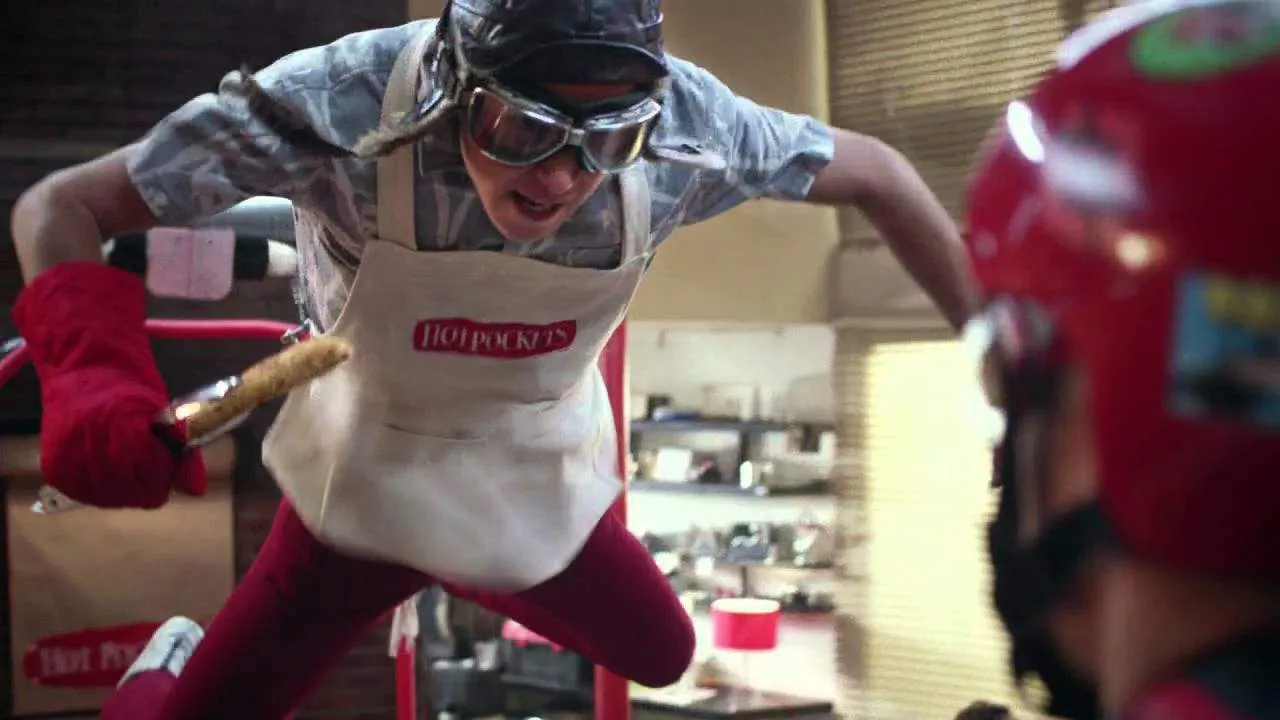
Still from the Hot Pockets “Hunger For More” skydiving chamber spot (2016)

SELECTED WORK / PRODUCTION

Hot Pockets “Hunger For More” Skydiving Chamber

Released
January 10, 2016
SCANable role
3D Full Body Scan and Retopology
VFX vendor
The Mill
  • Animation
  • Body Scanning
  • Commercial/Advert
  • Retopology
  • VFX

Hot Pockets’ “Hunger For More” skydiving chamber spot shows that with the heartiness of premium pepperoni and 100% real cheese, more is possible. The 2016 commercial drops its snackers into a hand-crafted skydiving chamber, inviting viewers to grab a hearty, satisfying snack and refuel.

SCANable provided 3D full-body scanning and retopology for the spot, delivering clean, animation-ready digital models to visual effects studio The Mill for the commercial’s CG work.


The pose you capture decides the range you get

A scan is a single instant of a body. What that instant contains determines how far the resulting model can be pushed afterwards.

A neutral, open pose gives an animator room in every direction. A pose that closes an armpit, folds a wrist, or hides the inside of an elbow forces someone to invent that geometry later, and invented geometry is where deformation starts to look wrong. Choosing the pose is a technical decision made before anyone presses a button, not a matter of how the person happened to stand.

Simulation needs geometry it can trust

A wind chamber puts everything in motion at once — clothing, hair, skin. Recreating that digitally means running simulations, and every simulation resolves against a surface.

If that surface is approximate, cloth intersects the body, hair penetrates the shoulder, and an artist spends their time fixing collisions instead of directing motion. A measured body with clean, evenly distributed topology behaves predictably under simulation, which is the difference between a sim that runs and a sim that has to be babysat shot by shot. Retopology and asset preparation is what makes scan data simulation-ready.

A practical build and a digital extension in one frame

A hand-built chamber gives the spot something real to photograph — real light, real contact, real reactions from the performers. What it cannot give is every angle, every duration, or every physical impossibility the board asks for.

The join between the two is where scan data earns its place. Digital versions of the performers are built from the same bodies that appear in the practical coverage, so the cut between photographed and generated does not shift anyone’s proportions. See cyberscanning for the capture method and digital doubles for the result.

Shots the performer cannot physically be in

Free fall is the obvious example of an action a production cannot simply photograph. So are impacts, extreme angles, and durations no one can hold in a rig.

Those beats are covered digitally, and the cut only survives if the double is genuinely the same person. Proportion, weight, and posture have to match the photographed coverage exactly, because the shot before and the shot after are real. That is the argument for measured capture over an approximation: the standard the digital version is graded against is sitting in the same sequence. Our Mobile CyberSCAN™ Studios travel to the shoot so performers are scanned on the day, in the wardrobe the spot uses.

See more commercial work, or the full list of services.