SELECTED WORK / PRODUCTION
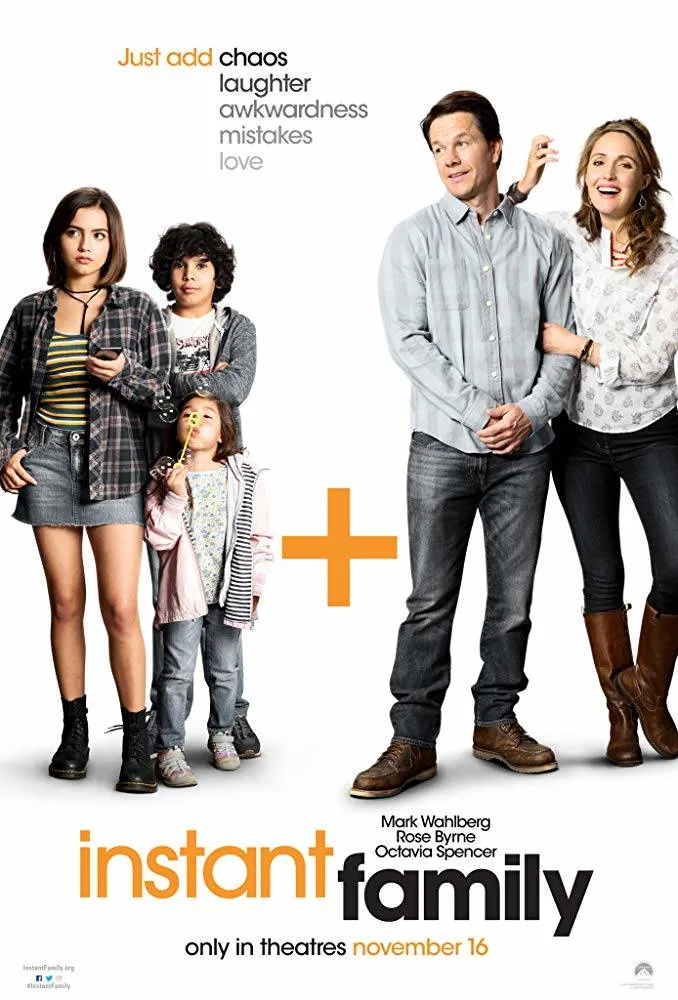
Instant Family
- Studio
- Closest to the Hole Productions
- Released
- November 15, 2018
- SCANable role
- LiDAR/3D Scanning and Modeling
- Director
- Sean Anders
Instant Family (2018) is an American comedy starring Mark Wahlberg and Rose Byrne as two parents who adopt three young children, directed by Sean Anders. The children are played by Isabela Moner, Gustavo Quiroz, and Julianna Gamiz, with Margo Martindale, Julie Hagerty, Tig Notaro, and Octavia Spencer also starring. Anders wrote the screenplay with John Morris, based in part on his own experiences. Released in the United States on November 16, 2018, the film grossed over $118 million and was called an “earnest, heartwarming comedy” by critics, who also praised the performances.
SCANable performed 3D full-body scanning for the film, providing accurate digital models of the cast to support the production’s visual effects.

Effects nobody is supposed to notice
Comedy and drama use visual effects constantly and advertise it never. Removals, cleanups, safety rigs painted out, a performer placed somewhere they could not safely be, a location extended past what was dressed.
None of that survives being noticed. In one specific way it is a harder bar than spectacle: a spectacle shot is allowed to look impressive, while an invisible shot is only allowed to look like photography.
Measured geometry is what keeps it there. When the digital element shares real dimensions with the plate, it sits in the frame without anyone having to sell it.
Scanning an ensemble rather than a hero
Large-cast films complicate capture in a way single-lead films do not. It is not one performer scanned exhaustively; it is many performers scanned consistently, often on the same day, in the wardrobe each is actually shooting in.
Consistency across the group is the real deliverable. Same capture setup, same processing, same conventions, so a supporting player and a lead arrive as comparable assets rather than two different kinds of file.
Our Mobile CyberSCAN™ Studios are built for that pattern. The array comes to the production, and the cast is captured between setups instead of on travel days.
A scan is insurance against the shot that changes
Almost no film finishes with the effects work it planned. Shots get added, scenes get restructured, and a sequence that needed nothing in September needs something in January.
A cast that was scanned during production can absorb that. A cast that was not turns every late change into a negotiation with availability, and availability after wrap is expensive when it exists at all.
It is the least glamorous argument for 3D body scanning and usually the one that pays for it. Everything is delivered render-ready.
Browse more feature-film capture work.