

SELECTED WORK / PRODUCTION
Kygo ‘Carry Me’ Virtual Reality Experience
- Studio
- Sony Music International
- Released
- January 3, 2017
- SCANable role
- 3D Scanning and Retopology
- VFX vendor
- MPC NY
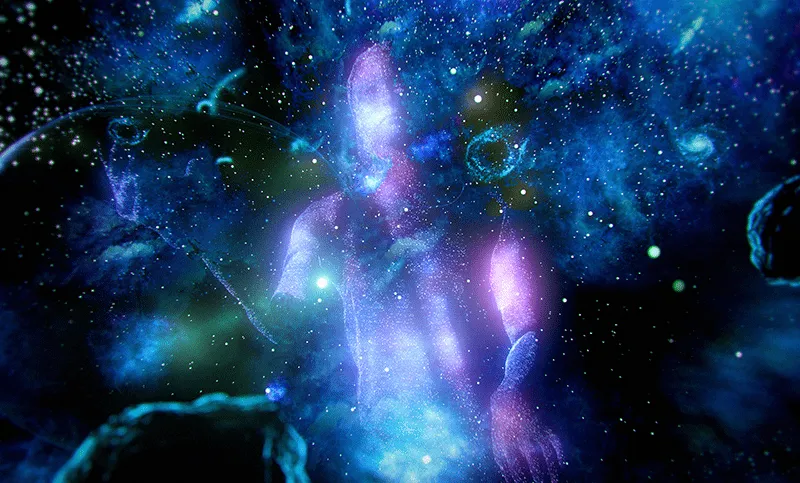
The Kygo ‘Carry Me’ VR Experience is an immersive virtual reality music experience from Norwegian superstar Kygo (Kyrre Gørvell-Dahll), released in January 2017 on PlayStation VR, PlayStation 4, and Oculus Rift. Developed by Sony Music International, Ultra Records, and MPC VR, the experience carries viewers on a journey through oceans, forests, mountains, skies, and a final epic sweep of the cosmos, using advanced CGI techniques that deliver a dramatically better experience than static 360 video capture. Kygo, who performed “Carry Me” at the closing ceremony of the Rio Olympic Games, wanted to take fans into the heart of the song through sight, sound, and feeling.
SCANable provided 3D scanning and retopology for MPC’s VR team, delivering production-ready digital assets for the experience’s photoreal CG world.
Presence is a geometry problem
Film gives an audience a frame. Virtual reality gives them a position, and the difference is everything a scan has to answer for.
There is no composition protecting a weak angle, no cut arriving before the viewer looks too long, and no distance chosen by a director. A person in a headset will stand still and study a surface for as long as they feel like, from wherever they happen to be standing.
Assets built for that context have to be right rather than convincing. Measurement is the only practical route to right, which is why photogrammetric capture underpins immersive work the same way it underpins digital doubles for film.
A real-time budget rewrites the deliverable
Offline rendering will tolerate a heavy mesh. A headset will not. The frame has to be produced twice, once per eye, dozens of times a second, and every polygon competes with every other for that budget.
This changes what “finished” means. The deliverable is not the densest accurate mesh — it is the lightest mesh that still carries the measured silhouette, with the fine surface detail moved into maps rather than geometry.
Doing that well is a retopology discipline, not a decimation setting. Automatic reduction removes triangles wherever it can; a rebuilt surface removes them where they were not doing anything and keeps them where the shape lives. The same skills apply across real-time and virtual production pipelines generally.
One capture, several hardware targets
An experience shipping across multiple platforms is really shipping several performance envelopes. Each has its own budget, and each needs its own level of detail derived from the same source.
Building those variants from one measured original keeps them consistent. Building them independently guarantees they drift, and a viewer moving between platforms sees a subtly different world.
That is why the master asset is kept accurate and the compromises are made downstream, during modeling and optimisation, rather than baked into the capture.
Explore more music and immersive projects, or see the full service list.