

← Back to all work
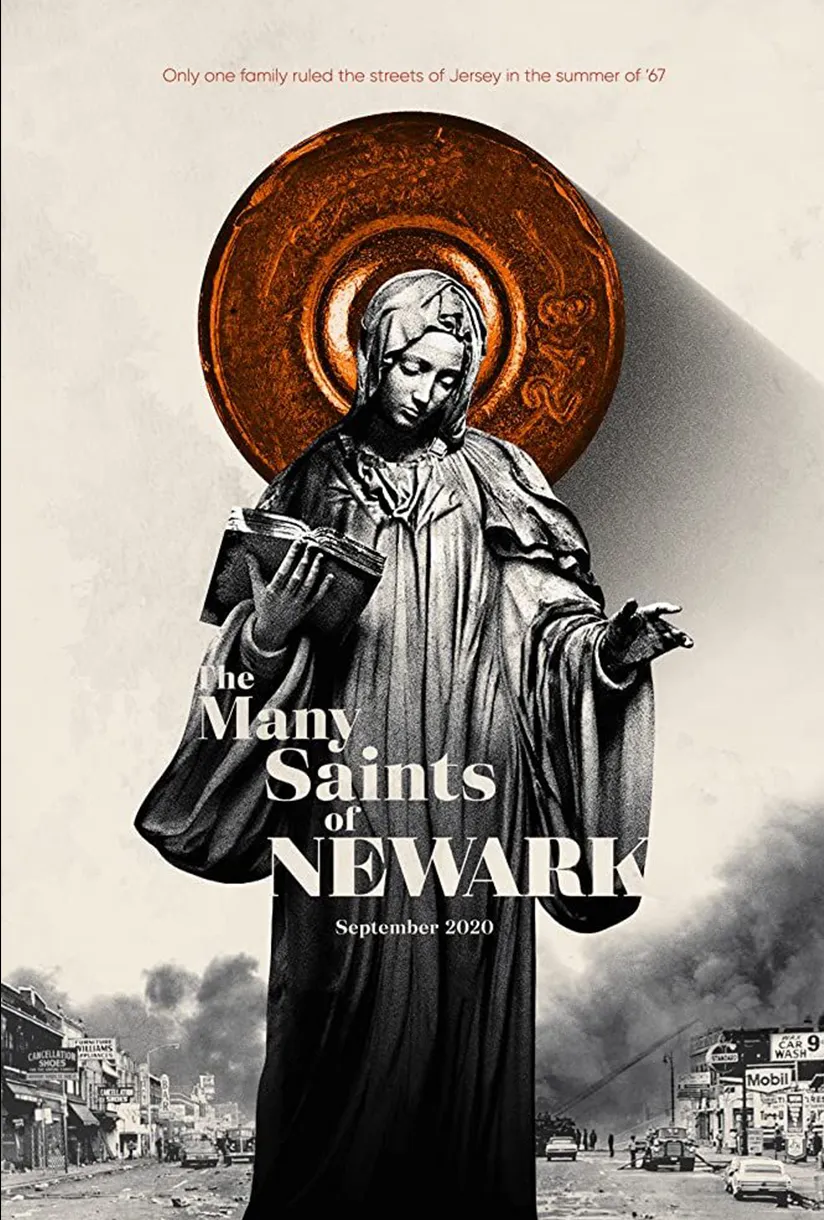
Official poster for The Many Saints of Newark (2021), the Sopranos prequel film — HBO

SELECTED WORK / PRODUCTION

Many Saints of Newark

Studio
HBO
Released
September 30, 2021
SCANable role
LiDAR/3D Scanning and Modeling
Director
Alan Taylor
  • Body Scanning
  • CG
  • Environments
  • Feature Film
  • Props
  • VFX

The Many Saints of Newark (2021) is the crime drama prequel to The Sopranos, directed by Alan Taylor and written by David Chase and Lawrence Konner. The film stars Alessandro Nivola, Leslie Odom Jr., Jon Bernthal, Corey Stoll, Michael Gandolfini, Billy Magnussen, John Magaro, Michela De Rossi, Ray Liotta, and Vera Farmiga. Set in 1960s and 1970s Newark, New Jersey, it uses the 1967 riots as a backdrop for tensions between the Italian-American and African-American communities. New Line Cinema produced the film alongside HBO Films; originally slated for September 25, 2020, its release was pushed by the COVID-19 pandemic, and Warner Bros. released it on October 1, 2021.

SCANable performed 3D scans of sets, actors, props, and other items for the film, delivering LiDAR and photogrammetric data for the visual effects teams.

Rebuilding a city that is no longer there

Period films face a problem no amount of location scouting solves. The streets are still there, but the signage, the shopfronts, the street furniture, the vehicles, and half the buildings are not.

The practical answer is to dress what can be dressed and rebuild the rest digitally. That works, and it only works if the digital half is anchored to the real half at true dimension.

Measured geometry of the standing structures gives the CG work its coordinate system. A period façade added to a modern block sits at the correct height and setback because the block was surveyed, not estimated — and the audience reads the whole street as one place rather than as two eras composited together.

The prop you cannot get a second time

Period dressing is frequently borrowed, hired, or one of a very small number of surviving examples. It arrives for the shooting day and leaves at wrap, and no one is going to source it again to answer a question in post.

Scanning it while it is on set converts a temporary loan into a permanent asset. Whatever the VFX team later needs — a duplicate in the background, a version that can be damaged, an element that has to persist into a shot the object was never physically in — is derived from a measurement of the actual article.

That is a very different thing from building from photographs of it, because photographs record how it looked from where the camera stood and nothing about how big it was.

The work between raw data and a usable asset

Raw capture is not a deliverable. It arrives dense, noisy, holed where a surface was occluded, and carrying every piece of clutter that happened to be in the room.

Turning it into something a vendor can work with means cleaning the data, closing what needs closing, deciding what is signal and what is set dressing that was never the subject, and rebuilding the surface with topology and UV layout an artist can actually animate or texture.

Skipping that stage does not save time; it moves the cost onto whoever opens the file next. Environment scans and performer capture both ship the same way — finished, scaled, and named to the production’s convention.

There is more feature film work to look through, alongside the full service list.