

SELECTED WORK / PRODUCTION
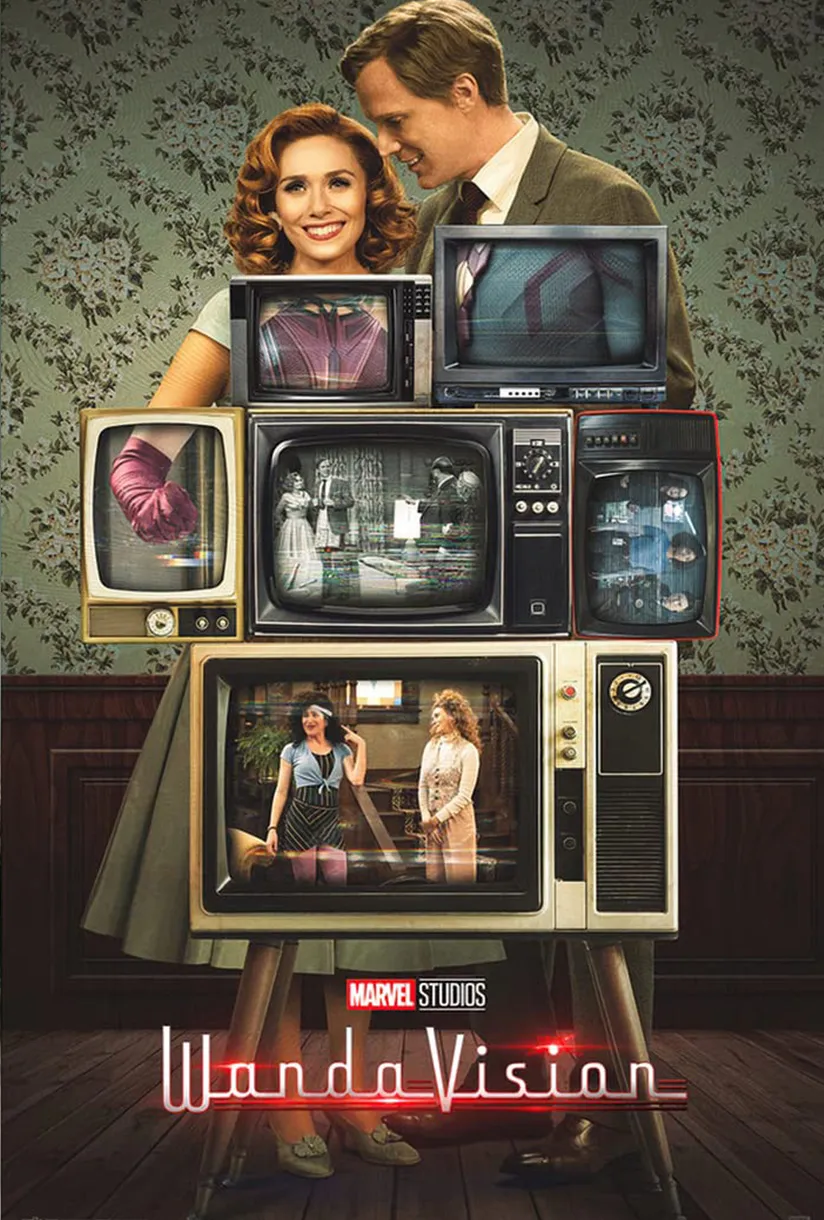
WandaVision
- Studio
- Marvel Studios
- Released
- January 14, 2021
- SCANable role
- LiDAR/3D Scanning and Modeling
- Director
- Matt Shakman
WandaVision is Marvel Studios’ Disney+ miniseries starring Elizabeth Olsen and Paul Bettany, which premiered in January 2021. Created by head writer Jac Schaeffer and directed by Matt Shakman, the series is based on the Marvel Comics characters Wanda Maximoff / Scarlet Witch and Vision, set in the Marvel Cinematic Universe after the events of Avengers: Endgame (2019) as part of Phase Four. Teyonah Parris, Kat Dennings, Randall Park, and Kathryn Hahn also star. Filming began in Atlanta, Georgia in November 2019 and, following a pandemic-related pause, resumed in Los Angeles.
SCANable performed 3D scans of sets, actors, props, and other items for the series, providing LiDAR environment capture and photogrammetric body scanning in support of its visual effects.
Face replacement is the highest bar a scan is held to
Most visual effects are graded against plausibility. Face work is graded against recognition, and recognition is a faculty every viewer has been refining since infancy.
Nobody can articulate why a replaced face is wrong. They simply know, instantly, that the person on screen is not quite the person they have been watching — and once they know it, they cannot stop seeing it.
There is no artistic route around that. The only reliable approach is to begin from an accurate, high-resolution capture of the actual performer’s head, so the digital face is a measurement rather than a likeness someone attempted. Everything downstream — tracking, blending, lighting — is a matter of preserving that accuracy rather than manufacturing it.
Head capture is not simply body capture at closer range
A full-body scan needs to be correct at the scale a figure occupies in a wide shot. A head scan needs to be correct at the scale a face occupies in a close-up, which is a different order of resolution entirely.
It also has a harder subject. Faces are never entirely still, and the features that carry identity — eyelids, nostrils, the corners of the mouth — are precisely the ones that move first.
Simultaneous array capture is the answer to both problems. Every camera exposes at the same instant, so the subject is genuinely frozen and there is no drift between views to reconcile. Cyberscanning exists specifically because sweeping methods cannot meet that requirement.
A world that gets redressed again and again
A series whose premise is a shifting reality asks a production to rebuild the same space repeatedly — different decade, different dressing, different lighting logic, same underlying geometry.
Each of those states is real for a few days and then gone. Capturing them as they exist gives the visual effects team a measured record of every version, at consistent scale, in one coordinate frame.
That is what allows a transition between two versions of the same room to be built as a genuine transformation rather than as two unrelated environments cut together. Set and location scanning supplies the geometry; cleanup and retopology turn it into assets a vendor can drive.
You can browse more episodic television work, or work through the full service list.
SELECTED WORK / GALLERY