← Back to all work
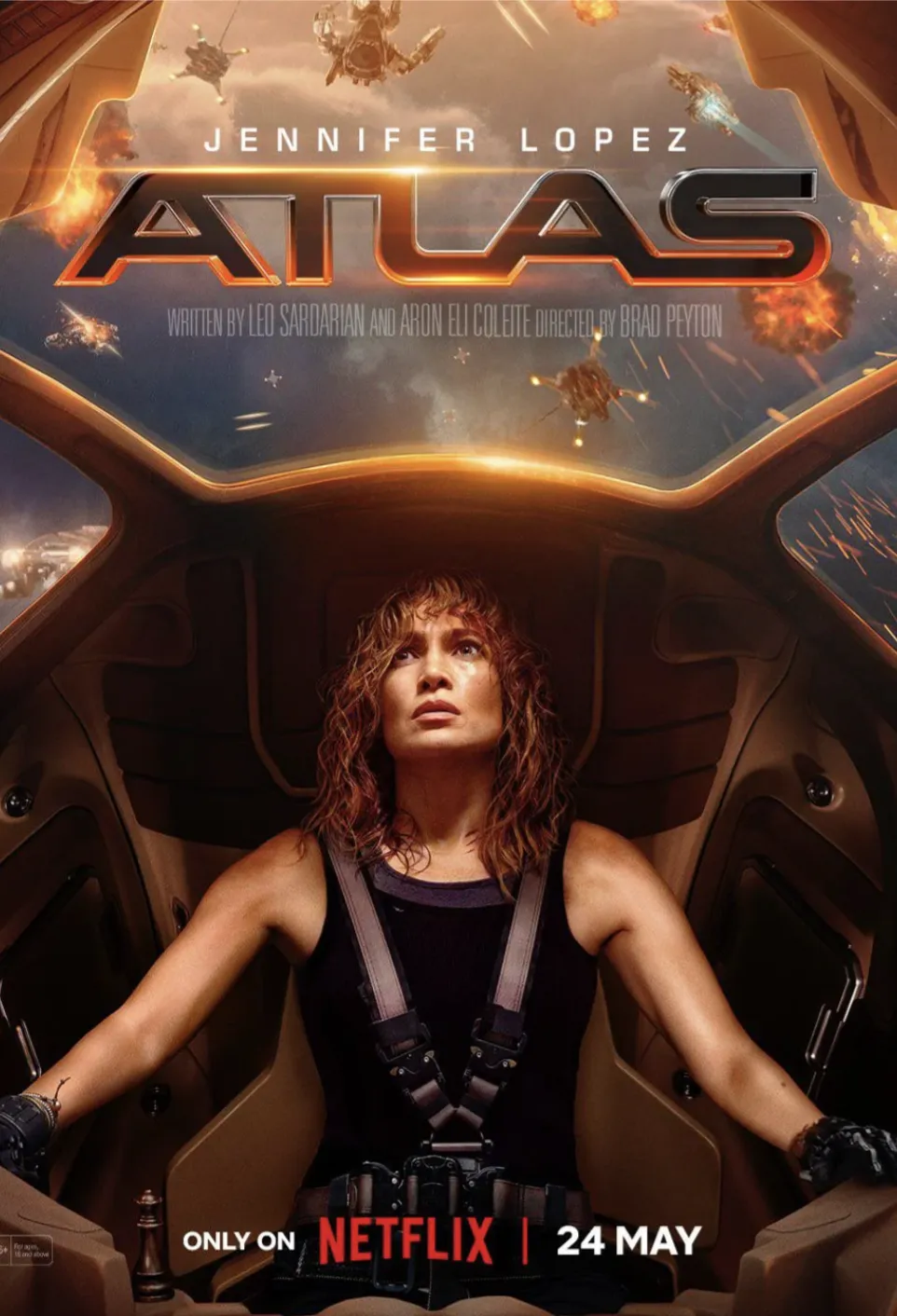
Official poster for Atlas (2024), Netflix’s sci-fi action film starring Jennifer Lopez

SELECTED WORK / PRODUCTION

Atlas

Studio
Netflix
Released
May 23, 2024
SCANable role
3D Scanning
Director
Brad Peyton
  • Aerial Photogrammetry
  • Backgrounds
  • Body Scanning
  • Environments
  • Feature Film
  • Props
  • VFX

Atlas is Netflix’s 2024 sci-fi action film starring Jennifer Lopez as a counterterrorism analyst forced to rely on the AI she deeply distrusts. Directed by Brad Peyton and written by Leo Sardarian and Aron Eli Coleite, the film follows the highly skilled analyst after a mission to apprehend a rogue robot fails, leaving artificial intelligence as her sole recourse. Simu Liu, Sterling K. Brown and Mark Strong co-star.

SCANable provided 3D laser scanning and LiDAR support along with aerial photogrammetry for the film, capturing environments, backgrounds and props as accurate digital assets for the visual effects teams.


A suit is still a body

Armored, powered and otherwise engineered characters are built around a human form. Proportion, joint placement, and the way a shell sits across shoulders and hips all derive from the performer inside it.

Starting from a measured body means the stylized character moves like something that could exist. Starting from a sculpt means every one of those relationships is a decision that gets tested in animation and corrected late. A digital double captured from the real performer is the armature the design is hung on, whether or not any of that body is ever visible in the final frame.

What virtual production asks of a scan

Content for LED volumes and previs environments has different requirements from a hero asset. It has to be geometrically correct, efficient enough to run in real time, and consistent in scale with everything else on the stage.

Measured environments satisfy the first requirement by construction. Virtual production pipelines can decimate, retopologize and optimize accurate data down to whatever the engine needs — but nothing downstream can add accuracy that was never captured in the first place.

Backgrounds are not wallpaper

A background that will be replaced or extended still needs real geometry behind it, because the replacement has to occlude correctly, receive light correctly, and hold parallax as the camera moves.

Measured set and location data provides that depth. A painted backdrop without it works in a locked-off frame and falls apart the moment anything moves, which on a science-fiction film is nearly every shot.

The library outlives the release

A scan is an asset with a life beyond the shot it was captured for. Marketing, additional photography, a sequel, a game adaptation or a remaster all reach back to the same data.

Productions that treat capture as a one-off expense re-scan or rebuild later at full cost, usually without access to the location, the build or the performer. Productions that treat it as an archive spend once. Measured data does not degrade and does not require anything it recorded to still exist.

The rest of our film scanning work is in the portfolio, with the full service list alongside it.