SELECTED WORK / PRODUCTION
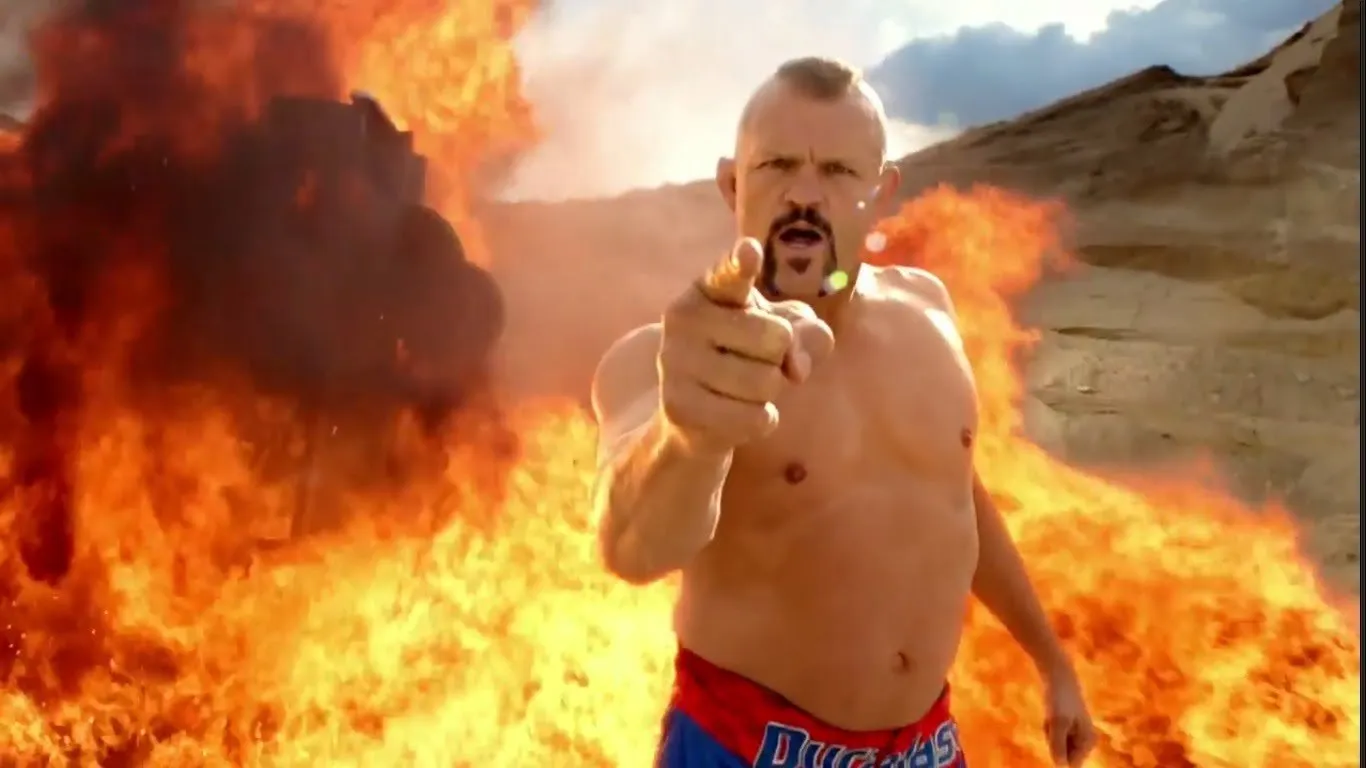
AutoZone Duralast Brakes “Stopping Power” featuring Chuck Liddell
- Studio
- MPG
- Released
- April 28, 2014
- SCANable role
- Cyber Scanning/LiDAR Scanning
- VFX vendor
- The Mill
AutoZone’s “Stopping Power” (2014) shows off Duralast Brakes in a way that had never been done before — with MMA champ Chuck Liddell taking them to the edge, and beyond. The Duralast commercial pushes the brakes to their limit as Liddell demonstrates exactly what stopping power means.
SCANable provided full body scanning and LiDAR set scanning on location in a Southern California rock quarry. A detailed, full-color scan of Chuck Liddell was performed in a tent on set, while 3D laser scans of the surrounding quarry were captured for camera tracking use in PFTrack. A 3D wrapped mesh was also delivered for shadow casting, lighting calculation and other computer-generated visual effects by The Mill.

Shadows are the cheapest tell
A CG element that casts no shadow, or casts one onto a flat plane where the ground is not flat, announces itself immediately.
Shadow-catching geometry solves this. A wrapped mesh of the real environment gives the renderer a surface for digital shadows to land on, so they break correctly over rock, dip into depressions, and stretch across slopes exactly as a practical shadow would.
None of that geometry is ever rendered visibly. It exists only so that light behaves. It is a good illustration of how much scanning work is invisible by design — see set and location scanning.
Natural terrain has nothing straight to solve against
Tracking a camera through a built environment is comparatively easy. Walls are planar, corners are perpendicular, and a solver has strong, distinguishable features to lock onto.
A quarry has none of that. The surfaces are irregular, self-similar, and repetitive at every scale, which is precisely the condition that makes an image-only solve drift. Loose material moves between takes as well.
Feeding a matchmove package a measured point cloud of the terrain converts a weak solve into a constrained one, because the tracker is fitting to known three-dimensional positions rather than guessing depth from parallax across ambiguous features.
A scanning stage that arrives on a truck
Full-body capture normally implies a facility: a fixed rig, controlled light, a calibrated room. A location shoot in a quarry has none of those things and no interest in losing talent for half a day.
The answer is bringing the controlled environment to the location — a portable array with its own lighting, erected on site, calibrated where it stands, capturing between setups and striking with the rest of the unit. That is what Mobile CyberSCAN™ Studios are for, and it is how a digital double gets captured on a schedule that never had room for one.
See more commercial projects, or browse the full service list.
SELECTED WORK / GALLERY