

SELECTED WORK / PRODUCTION
Cape Fear
- Studio
- Amblin Television
- Released
- June 4, 2026
- SCANable role
- 3D Scanning
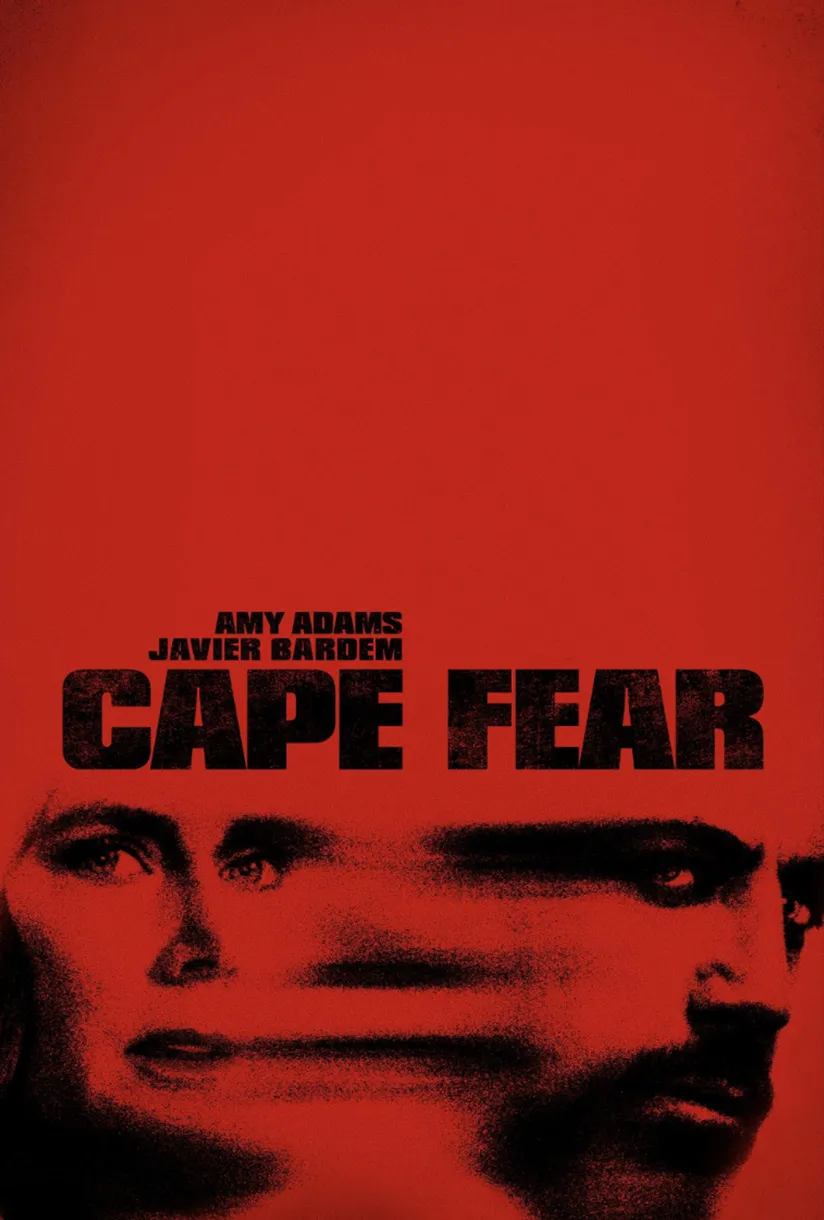
Cape Fear is a 2026 thriller drama miniseries created by Nick Antosca for Amblin Television, based on John D. MacDonald’s novel The Executioners. Produced by Eat the Cat, Universal Content Productions, and Amblin Television, the series draws on the classic 1962 and 1991 film adaptations and premiered on June 5, 2026. This modern reimagining follows a convicted predator who reinserts himself into the life of the family that helped put him away, exploring obsession, fear, and the unsettling idea that justice doesn’t always end when the sentence does.
SCANable VFX supported the production with high-resolution 3D scanning and photogrammetric capture, documenting actors and environments for visual effects integration. Our work enabled precise digital doubles, seamless set extensions, and grounded realism — ensuring the tension on screen feels as real as the world it inhabits.
A costume has weight and volume
A costume is not a painted layer on a body. It has thickness, weight, and a shape of its own that changes how a figure reads in silhouette.
Scanning a performer in costume captures that. The collar sits where the collar sits. A jacket breaks at the elbow the way that jacket breaks. Fabric that is stiff behaves stiffly, and fabric that hangs, hangs.
Rebuilding those things from photographs is possible and it is always a compromise, because the modeler is guessing at the volume underneath. Costume and wardrobe capture removes the guess, which is why cast are scanned in the clothes they actually shoot in rather than in a neutral suit.
Assets that have to survive a whole season
Episodic work is a continuity problem before it is a visual effects problem.
A ten-episode order is shot out of sequence, across months, by more than one director, and finished by more than one vendor. An asset built in episode two may be needed in episode nine, long after the crew that captured it has moved on.
That only works when the scan library is consistent at the point of capture — same scale convention, same coordinate origin, same naming, same processing. Corrections applied later never quite propagate evenly, and the inconsistency shows up as a set that subtly changes size between episodes.
A thriller lives on ordinary rooms
Genre spectacle can hide a great deal. Domestic dread cannot.
When the tension of a scene comes from a familiar house, a car, a stretch of water, the audience already knows what those things are supposed to look like. Any element added to them is measured against a lifetime of firsthand reference.
Measured set and location scanning is what lets an extension or a replacement element inherit the real dimensions of the practical space, so the join is a question of lighting rather than a question of geometry.
Capturing without slowing the day
Scanning has to fit inside a working schedule, not compete with it.
Our Mobile CyberSCAN™ Studios travel to the production, so performers can be captured on location between setups rather than pulled away to a facility. Data is processed and delivered as render-ready assets built to the vendor’s spec.
See more television work, or read about the services we provide.