

SELECTED WORK / PRODUCTION
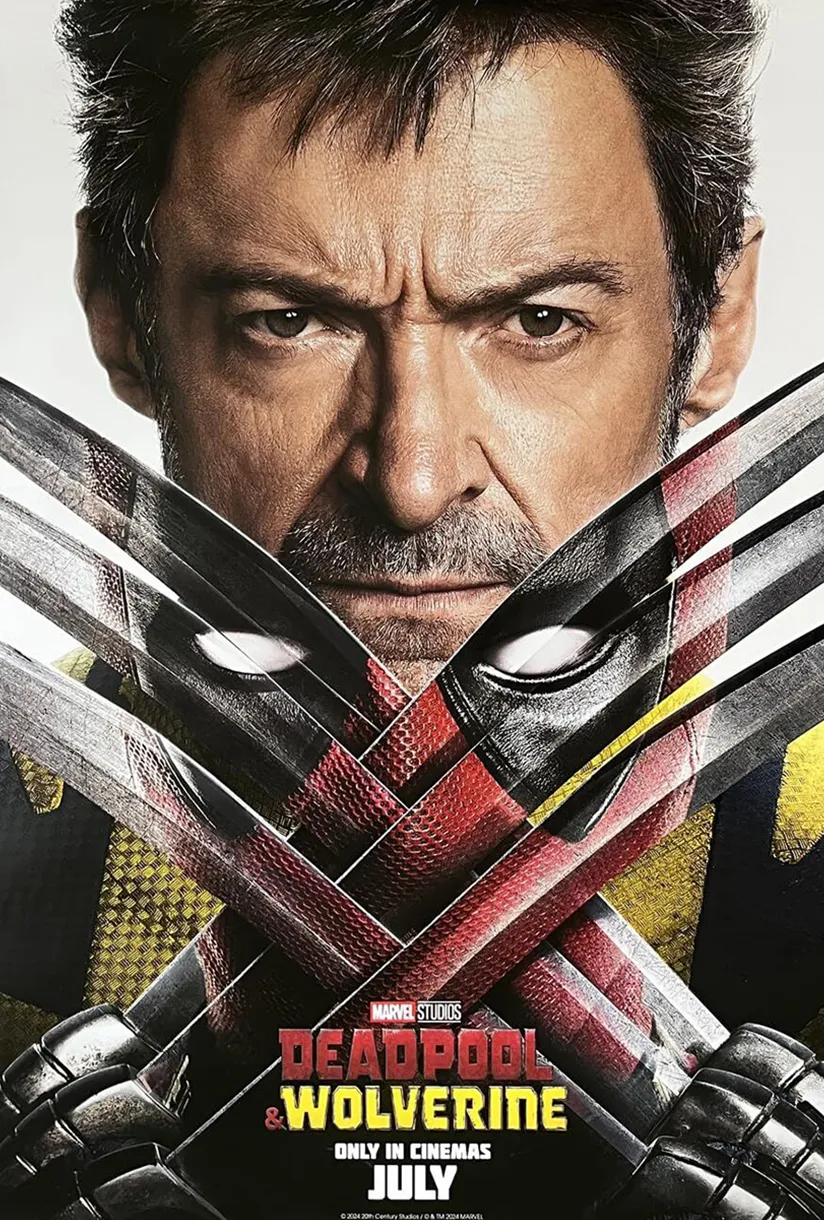
Deadpool & Wolverine
- Studio
- Marvel Studios
- Released
- July 25, 2024
- SCANable role
- Cyber Scanning, LiDAR and Texture Photography
- Director
- Shawn Levy
Deadpool & Wolverine is Marvel Studios’ 2024 superhero film starring Ryan Reynolds and Hugh Jackman, the 34th film in the Marvel Cinematic Universe. Produced with Maximum Effort and 21 Laps Entertainment and distributed by Walt Disney Studios Motion Pictures, the sequel to Deadpool (2016) and Deadpool 2 (2018) was directed by Shawn Levy from a screenplay he wrote with Reynolds, Rhett Reese, Paul Wernick, and Zeb Wells. Emma Corrin, Morena Baccarin, Rob Delaney, Leslie Uggams, Aaron Stanford, and Matthew Macfadyen co-star as Deadpool teams with a reluctant Wolverine from another universe to stop the Time Variance Authority from destroying his home reality.
SCANable provided 3D scans of several sets and actors for the film’s New York reshoots, delivering cyber scanning, LiDAR, and texture photography that supported the visual effects work on the 2024 summer blockbuster.
Three disciplines, one capture window
Reshoots compress everything. The set is standing for a limited run, the cast is on a short availability window, and the visual effects vendors downstream still need the same completeness of data they would get from a full production capture. That is why this show called for three separate capture disciplines rather than one.
Cyberscanning covered the performers — full-body photogrammetric capture of a whole human being, wardrobe and all, recorded from every angle in a single instant. LiDAR covered the sets, producing measured geometry that VFX could track a camera against. Texture photography covered surface: the color, wear, and material information that geometry alone never carries.
Each answers a different question. Geometry tells an artist where something is. Texture tells them what it is made of. A show that gets only one of the two ends up with assets that read as computer-generated no matter how much time goes into them.
Why the studio travels
The alternative to bringing a capture array to a production is sending the cast to a fixed facility — which means scheduling talent, moving them across a city, and burning a half-day that the schedule does not have. Our Mobile CyberSCAN™ Studios exist to remove that trip entirely. The array deploys where the show already is, a performer walks in from set in costume, and they are back on the floor in under a minute.
That speed is not a convenience feature. On a reshoot, it is the difference between capturing a performer in their hero wardrobe and capturing them in whatever they were wearing on the day they could be spared.
The array fires all cameras simultaneously. There is no sweep, no hold, and no asking someone to stand still while a sensor completes a pass — which matters because human beings cannot hold a pose to sub-millimeter tolerance, and a scan that drifts is a scan that has to be repaired by hand later.
What LiDAR delivered on the sets
Set scanning on a reshoot serves a specific downstream purpose: it lets the VFX team reconcile the new footage with what was shot months earlier. A registered point cloud of the standing set is a measurable record of the space — where walls sat, how high the ceiling ran, what the actual dimensions were rather than what the plans said.
From that data, vendors derive camera tracking solutions, matchmove, layout reference, and the clean geometry that set extensions are built on top of. Without it, matching a digital extension to a practical set becomes a process of eyeballing and iterating against plates.
Texture photography as its own pass
Texture photography is the pass that gets cut first when a schedule tightens, and the one most often regretted. Cross-polarized capture separates diffuse color from specular response, which is what allows a modeler to build a material that behaves correctly under lighting the original set never had.
For a film that moves its characters between realities, that flexibility is not optional. An asset lit only for the conditions it was captured in cannot be dropped into a different environment convincingly. Our photometric and OLAT capture workflows extend this further for shows that need a genuinely relightable double.
What the vendors received
Scan data is not a deliverable on its own. Raw output from a camera array is thousands of frames and a solve; what a vendor can actually use is clean, scaled, correctly oriented geometry with usable texture maps.
In house, we take capture through retopology, texturing, and render-ready asset builds before anything ships. Assets arrive named to the production’s convention and ready to drop into the pipeline — not as a processing problem handed to whoever has bandwidth.
For Deadpool & Wolverine, that meant the reshoot capture arrived as digital doubles, tracked set geometry, and surface data that could be used immediately rather than triaged.
Browse more of our feature film work, or see the full range of capture services.
SELECTED WORK / GALLERY