

← Back to all work
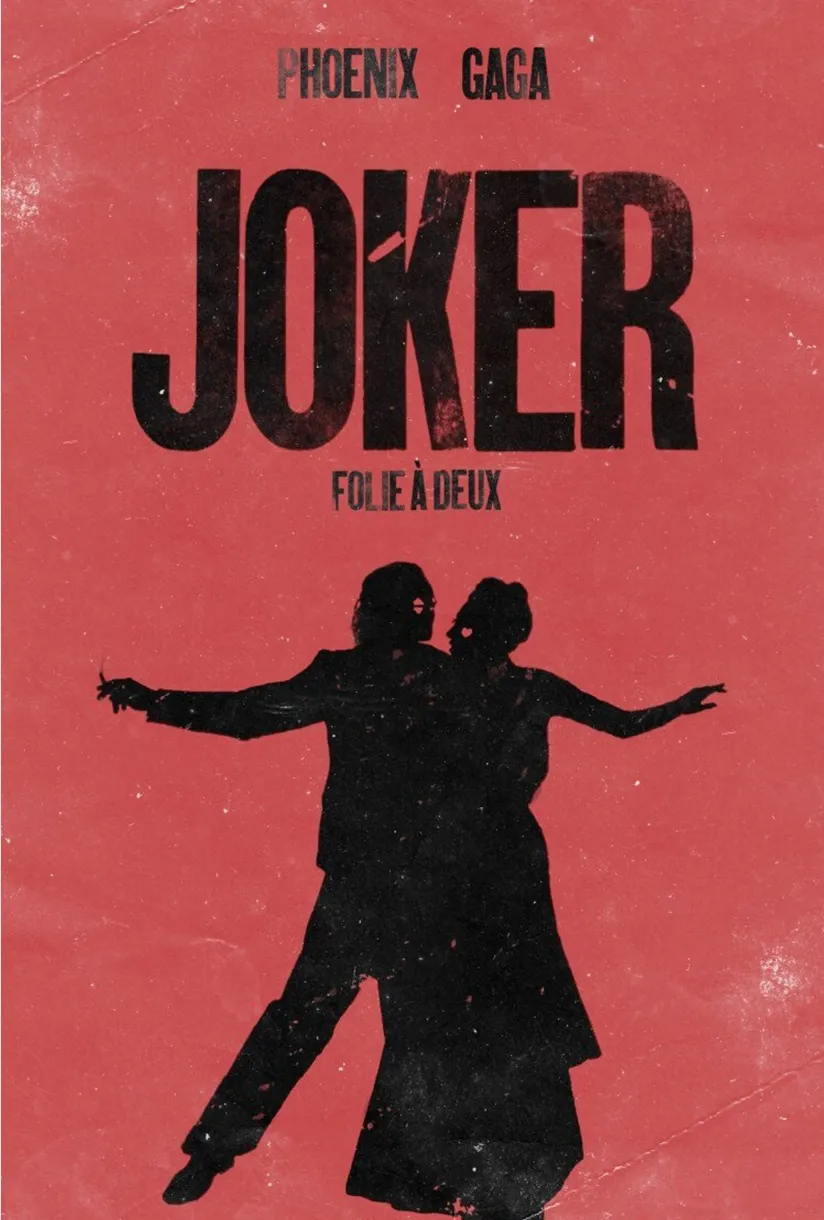
Official poster for Joker: Folie à Deux (2024) starring Joaquin Phoenix and Lady Gaga — Warner Bros

SELECTED WORK / PRODUCTION

Joker 2

Studio
Warner Bros
Released
October 3, 2024
SCANable role
3D Scanning
Director
Todd Phillips
  • Backgrounds
  • Body Scanning
  • CG
  • Environments
  • Feature Film
  • Props
  • VFX
  • Vehicles

Joker: Folie à Deux (2024) is Warner Bros’ musical thriller directed by Todd Phillips, who co-wrote the screenplay with Scott Silver as the sequel to Joker (2019). Based on DC Comics characters, the film stars Joaquin Phoenix, reprising his role as the Joker, and Lady Gaga as Harley Quinn, with Zazie Beetz also returning from the first film. It was produced by Warner Bros. Pictures and Joint Effort, with principal photography in Los Angeles, New York, and Belleville, New Jersey from December 2022 to April 2023.

SCANable was responsible for 3D scanning principal characters, sets, props, and vehicles for the feature film, delivering photogrammetry-based digital doubles and reference assets for the visual effects teams.

Invisible effects need better data than visible ones

A film like this does not advertise its visual effects. There are no creatures and no spectacle; the work is period correction, environment extension, and shots that could not be staged practically.

That is a harder standard, not an easier one. Spectacle gives an audience permission to suspend disbelief. Grounded, naturalistic filmmaking does not — every digital element has to survive being looked at directly, in a scene where nothing else is asking for attention.

Which means the underlying capture has to be accurate rather than merely convincing.

Character work on a performance-driven film

When a film is carried by two performances, the tolerance on any digital representation of those performers narrows sharply. The audience has spent two hours studying these faces.

Digital doubles here exist for practical reasons — coverage in environments that were extended, stunt and crowd situations, shots the camera could not physically achieve — and each one has to be indistinguishable from the real coverage cut around it.

Our arrays fire every camera at the same instant. That single detail is what removes the drift a swept or multi-pass capture introduces, and drift is what forces the hand cleanup that erodes likeness. See cyberscanning for how the technique works.

Scanning across three shooting locations

Principal photography ran across Los Angeles, New York, and New Jersey. A capture program supporting that cannot live in a fixed facility.

Our Mobile CyberSCAN™ Studios travel to the production, which means performers scan in the wardrobe, hair, and makeup the scene actually calls for — on a film where character appearance shifts meaningfully, that is not a convenience, it is a requirement.

Sets and locations were captured on the same visits, so environment and character data share a coordinate space from the start.

Period vehicles and period streets

Vehicles on a period production are cast, not rented. They are specific models in specific condition, and their presence is a large part of what places the film in time.

Scanning them produces geometry that can be duplicated into a background, placed in an extended street, or used in a shot the physical vehicle could not perform. It also solves the reflection problem in the other direction — a scanned car is what CG environment work gets reflected in.

The environment side runs through set and location scanning, where measured point-cloud geometry becomes the foundation for background and set-extension work.

Props and reference assets

Not every scan becomes a hero asset. A significant share of the work is reference: geometry the VFX team uses to place, scale, light, or track something else correctly.

Reference assets are cheap to capture on the day and impossible to capture after the fact. Once a set is struck and a prop is gone, a measured record is the only version that still exists.

Everything ships through our modeling and asset build pipeline — scaled, oriented, and named to the production’s convention.

See more feature film work, or browse the full service list.