SELECTED WORK / PRODUCTION
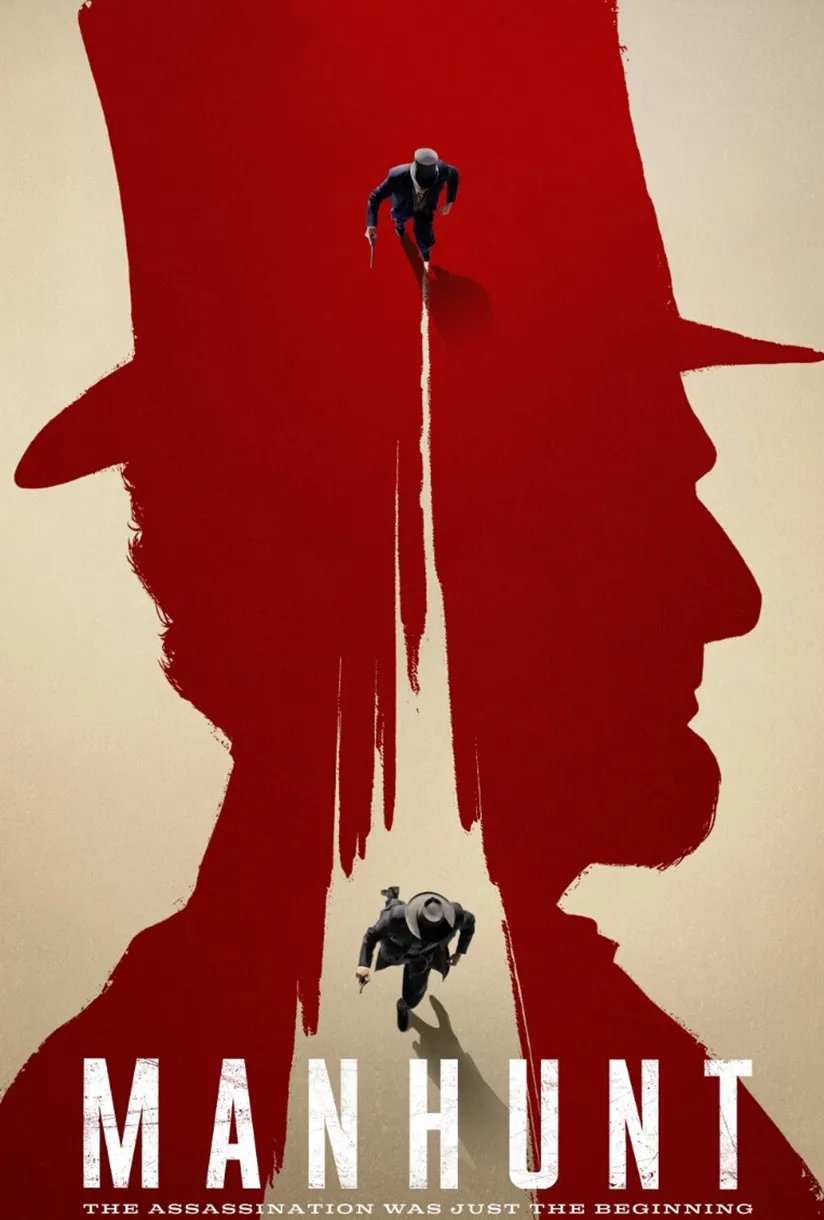
Manhunt
- Studio
- Lionsgate Television
- Released
- March 14, 2024
- SCANable role
- 3D Scanning
- Director
- Carl Franklin/John Dahl/Eva Sorhaug
Manhunt (2024) is Lionsgate Television’s historical drama miniseries created by showrunner Monica Beletsky, adapted from James L. Swanson’s book Manhunt: The 12-Day Chase for Lincoln’s Killer. The series follows Edwin Stanton’s search for John Wilkes Booth in the aftermath of Abraham Lincoln’s assassination. Directed by Carl Franklin and starring Tobias Menzies, the series was released on March 15, 2024.
SCANable provided 3D scanning for the production, capturing actors and period environments with photogrammetry to support the series’ visual effects and camera tracking work.

Period accuracy is an argument you can lose
Period work is an argument about accuracy. The buildings, streets and interiors a nineteenth-century story needs are largely gone, altered, or surrounded by things that had not been invented yet.
What survives — a preserved structure, a period-correct interior, a stretch of street with the right proportions — is worth measuring precisely, because it becomes the reference standard for everything built around it. An environment extended outward from real measured geometry inherits correct proportion. One assembled from photographs of buildings at unknown scale inherits nothing, and every dimension in it is a guess that later shots have to keep agreeing with.
Protected locations, narrow access
Historic sites are not standing sets. Access is limited, often short, frequently shared with the public, and rarely repeatable at any price.
That puts all the weight on planning: which positions are needed, what order keeps registration tight, and how much coverage makes a return visit unnecessary. Set and location scanning at a heritage site is closer to survey work than to production capture — non-contact, non-invasive, and finished inside whatever window the custodian granted.
Removal is as common as addition
A period drama spends much of its visual effects budget taking things out: aerials, road markings, signage, modern glazing, parked cars, anything that betrays the century.
A clean removal has to know what sits behind the thing being removed, and at what depth. Measured geometry supplies that, which is why so much of the scan data on a period production ends up serving matchmove and clean-up rather than any visible CG element. The audience never sees the work; they only see a street that does not contradict itself.
Wardrobe that exists in one copy
Period costume is bespoke and often made once. There is no second version to ship to a vendor and no catalog reference to model from.
A costumed scan is therefore the only complete record of the garment — captured on the performer, in the shape it takes when worn and moved in. Digital doubles built from it match the screen wardrobe exactly, and our Mobile CyberSCAN™ Studios work on the unit so capture happens without pulling anyone out of costume.
More episodic television work is in the portfolio, alongside the full service list.
SELECTED WORK / GALLERY