← Back to all work
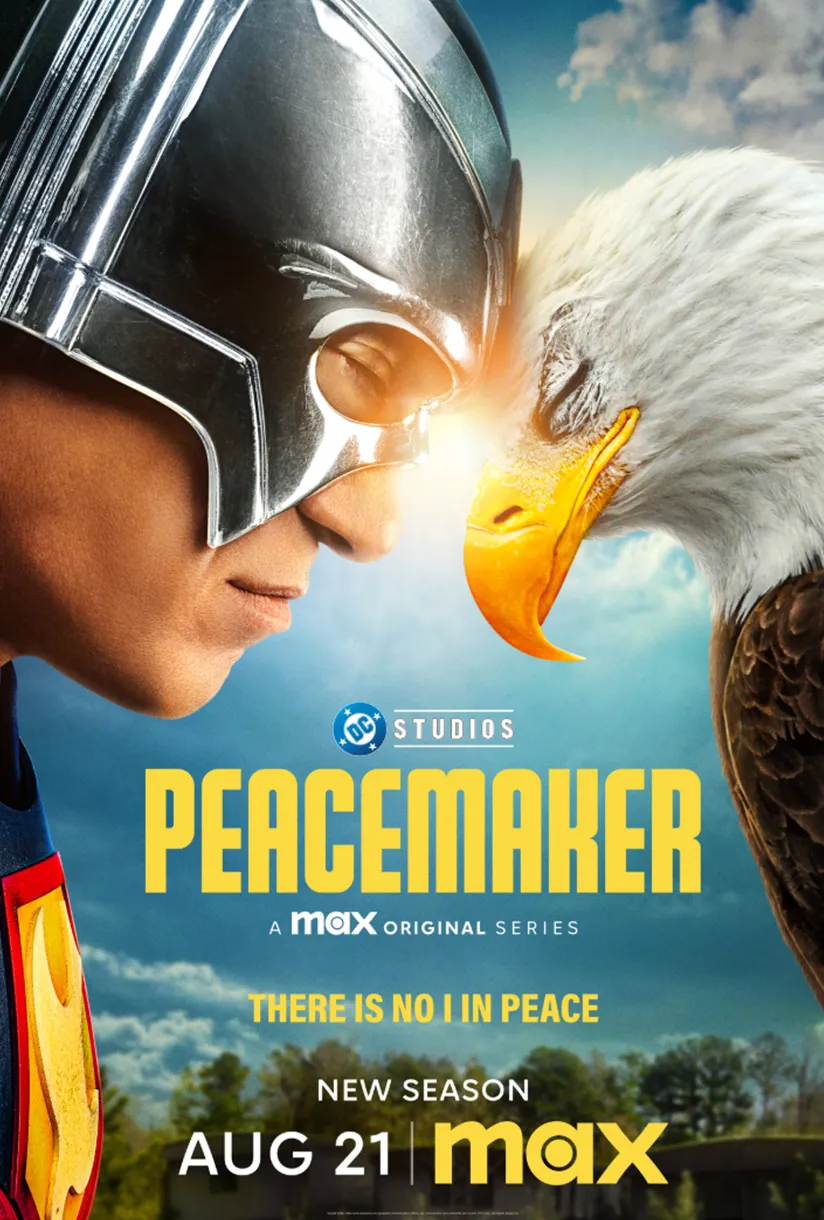
Official poster for Peacemaker (2025) — DC Studios

SELECTED WORK / PRODUCTION

Peacemaker

Studio
DC Studios
Released
August 20, 2025
SCANable role
3D Scanning
  • CG
  • Props
  • Set Extension
  • Television
  • VFX

Peacemaker is DC Studios’ superhero series starring John Cena, bringing James Gunn’s irreverent vision to high-energy television. The show pairs practical props and set pieces with extensive visual effects, extending its action sequences well beyond what was captured in camera.

SCANable provided precision prop scanning for the series, from iconic weapons to key set pieces. High-resolution 3D scans produced accurate digital replicas that let the VFX teams extend action sequences and enhance realism — supporting the seamless integration of practical elements into the show’s effects work alongside John Cena’s unforgettable performance.


The practical prop is the reference standard

On a show that leans hard on practical builds, every digital element is judged against something the audience has already seen in camera.

That is a specific and unforgiving benchmark. A CG version of a helmet, a weapon, or a set piece is not competing with the audience’s imagination — it is competing with the real object from three shots ago. Any deviation in proportion, wear, or surface reads immediately.

Measuring the actual object is the only reliable way to clear that bar. Modeling from photographs introduces proportional error that is invisible in isolation and glaring in a cut.

Why weapons and hardware are difficult subjects

Prop weapons and armor are usually the worst possible photogrammetry subjects: matte black, highly polished, or both.

Matte black surfaces absorb the detail a solve needs to find features. Polished metal reflects the environment instead of showing its own surface, so the “features” move as the camera does. Either one defeats a naive capture.

Getting usable geometry off them is a matter of lighting discipline, surface treatment where appropriate, and a capture strategy designed for the material — not simply adding more cameras. Precision here is a craft problem before it is an equipment problem.

Extending action beyond what was shot

The series stages a great deal practically and then pushes it further. That extension only works if the digital continuation is built from the same objects that were photographed.

A scanned prop can be duplicated across a wide shot, destroyed in a way the physical build cannot survive, or placed in an environment that does not exist. In each case the audience is looking at geometry derived from the real thing, which is why the extended version cuts against the practical coverage without seam.

Set pieces and the things that get destroyed

Action television is hard on its set pieces. Objects get damaged, rebuilt, repainted, and eventually struck.

A scan taken while a piece is intact outlasts the object entirely. It is continuity insurance across episodes, and it is the source geometry for any shot where the piece has to do something physically impossible.

Environment and standing-set capture runs through our set and location scanning service, generally on the same visit as the prop work.

What VFX receives

Raw capture is not a deliverable. Scan data goes through in-house retopology, texturing, and render-ready asset builds first — clean topology, sensible UVs, real-world scale, and naming matched to the production’s convention.

For productions that also need character capture, our Mobile CyberSCAN™ Studios deploy alongside the prop work and deliver digital doubles from the same visit.

More episodic television work is in the portfolio, and the full service list covers the rest.