

← Back to all work
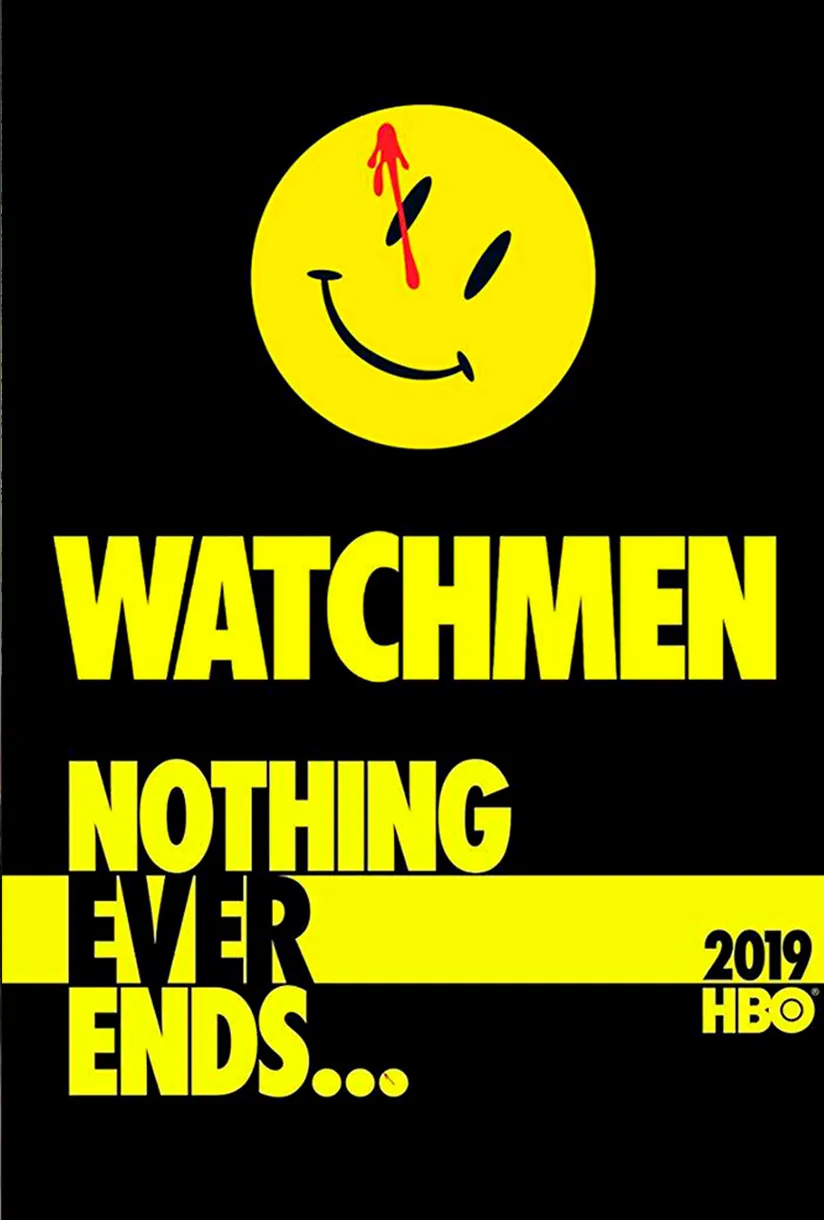
Official poster for Watchmen (2019) — HBO series created by Damon Lindelof

SELECTED WORK / PRODUCTION

Watchmen

Studio
HBO
Released
October 19, 2019
SCANable role
LiDAR/3D Scanning and Modeling
  • Backgrounds
  • Body Scanning
  • CG
  • Environments
  • Props
  • Set Extension
  • Television
  • VFX

Watchmen is HBO’s 2019 superhero drama from creator Damon Lindelof, continuing the groundbreaking graphic novel by Alan Moore and Dave Gibbons. Set in an alternate history where “superheroes” are treated as outlaws — a contemporary America where costumed heroes are banned and the doomsday clock continues to tick — the series embraces the nostalgia of the original while breaking new ground of its own. The cast includes Regina King, Jeremy Irons, Don Johnson, Jean Smart, Tim Blake Nelson, Louis Gossett Jr., Yahya Abdul-Mateen II, and Hong Chau. The series premiered on HBO in the fall of 2019.

SCANable performed 3D scans of sets, actors, props, and other items for the series, delivering LiDAR and photogrammetry data for its visual effects and set extensions.

The show we built our first 4D array for

Watchmen is the reason our first genlocked 4D camera array exists. We built it in 2017 for this show, and its capture drove the series’ hologram effects — every camera on a shared clock, recording a performance from every direction at the same instant.

That rig became C.A.L.V.I.N.N., and the name is a nod to the show itself. The full story is on our hologram and 4D capture page.

Alternate history is a set-extension problem

A show set in a world that diverged from ours decades ago has to look like our world with specific, deliberate differences. Not a fantasy world — a recognizable one, altered.

That is almost entirely achieved through environment work. Real locations get period-corrected, re-signed, re-populated, and extended, and the alterations only hold if they sit on geometry that is genuinely accurate to the place that was photographed.

LiDAR set and location scanning supplies that geometry. The extension is then built outward from measurement rather than estimated from a plate, which is the difference between an alteration that reads as photographed and one that reads as composited.

Period recreation on real streets

Recreating a specific historical setting on a modern location means removing as much as adding. Contemporary signage, vehicles, and architecture have to come out; period elements go in.

Both operations need the same thing: a measured record of what is actually there. Clean removal requires knowing the geometry behind the object being removed, and clean addition requires knowing the geometry the new element sits against.

Capture happens on the production’s schedule, at the location, in whatever window the show has — which is why the equipment travels rather than the production coming to it.

Costumed characters and body scanning

A series about masked and costumed figures produces a specific capture requirement: performers in full costume, including headwear and masks that fundamentally change the silhouette.

Scanning out of costume and re-dressing digitally is expensive and rarely matches. Capturing the actual costumed performer produces the real thing — how the fabric falls on that body, how a mask sits on that head, how the whole assembly reads when the person stands naturally.

Our Mobile CyberSCAN™ Studios deploy to the production so this can happen between setups rather than costing a travel day.

Digital doubles for action the performer cannot do

Costumed action generates shots that finish digitally: falls, impacts, and stunts that are unsafe or impossible to stage with the actor.

Those cuts survive only if the double is faithful. Every camera in our arrays fires at the same instant, so there is no drift from the performer shifting mid-capture — the foundation of usable digital double geometry, and the core of what cyberscanning means as a technique.

Modeling and delivery

The role here covered modeling as well as capture. Scan data went through retopology, texturing, and render-ready asset builds before delivery, arriving scaled, oriented, and named to the show’s convention.

For an episodic production reusing assets across a season, that library consistency is what keeps the world coherent from episode to episode.

The rest of our series and television work is in the portfolio, with the full service list alongside it.