

← Back to all work
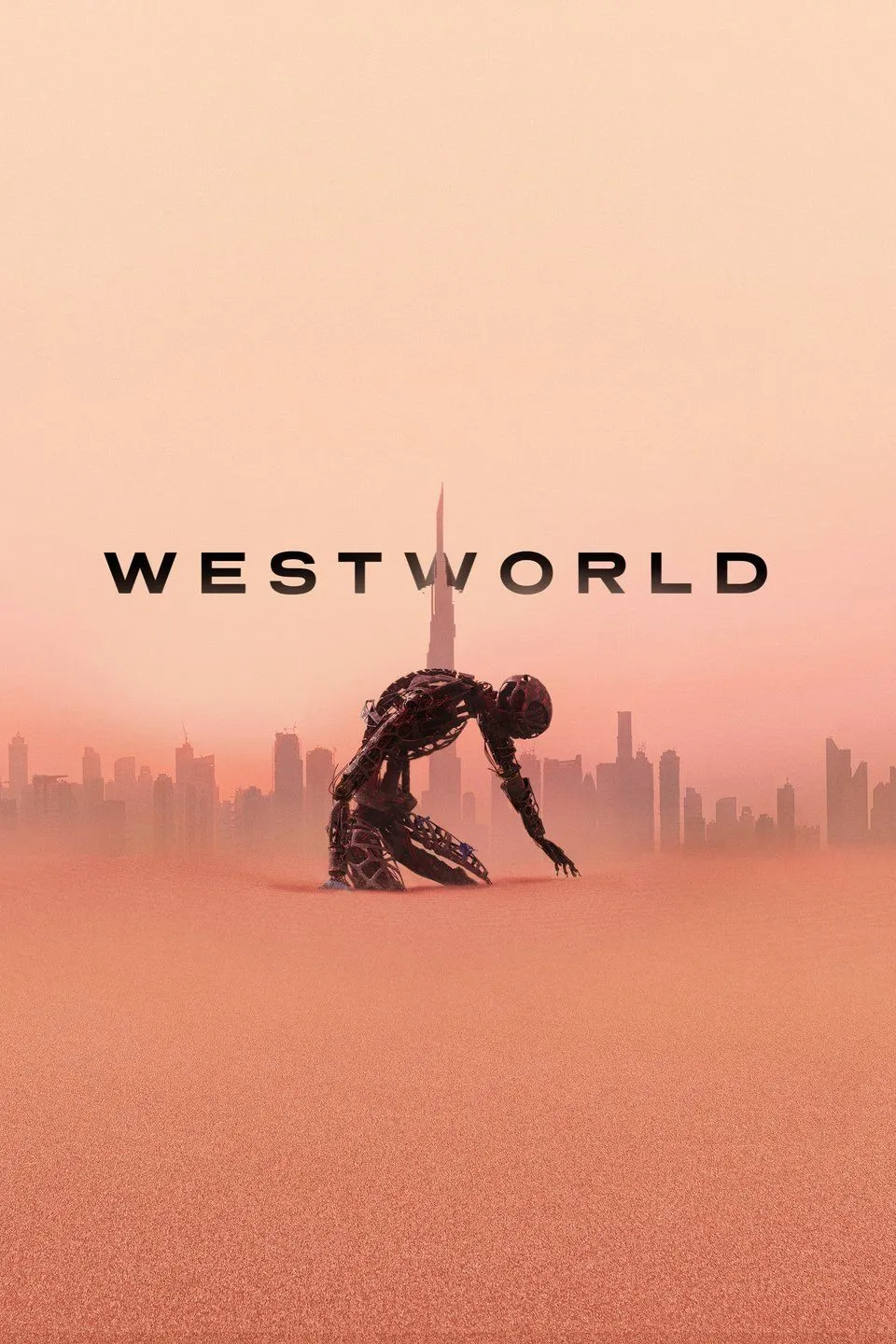
Official poster for Westworld Season 3 (2020) — HBO

SELECTED WORK / PRODUCTION

Westworld Season 3

Studio
HBO
Released
March 14, 2020
SCANable role
LiDAR/3D Scanning and Modeling
Director
Jonathan Nolan
  • Backgrounds
  • Body Scanning
  • CG
  • Environments
  • Set Extension
  • Television
  • VFX

Westworld Season 3 is HBO’s dark sci-fi odyssey about the dawn of artificial consciousness, which premiered on March 15, 2020. Picking up immediately after the events of season two, Dolores — having escaped the park with the cores of several hosts, including Bernard’s — takes residence in neo-Los Angeles, where her relationship with Caleb reveals how artificial beings are treated in the real world, while Maeve finds herself in a Delos park based on Fascist Italy during World War II. Inspired by Michael Crichton’s film, the series is produced by Bad Robot Productions, Jerry Weintraub Productions, and Kilter Films in association with Warner Bros. Television, with Jonathan Nolan, Lisa Joy, and J.J. Abrams among the executive producers.

SCANable performed 3D scans of sets, actors, props, and other items for Season 3, providing LiDAR and photogrammetry data in support of the show’s visual effects.

Building a city that does not exist

The season relocated the series from a constructed park to a near-future Los Angeles, which is a specific and demanding kind of VFX problem: real streets that have to read as a plausible future without becoming fantasy.

That work is anchored in measurement. A real location captured as a registered point cloud can be extended upward, re-clad, and populated with architecture that was never there, while the ground plane, sightlines, and proportions stay honest to the place that was photographed.

LiDAR set and location scanning is what makes that anchoring possible. Without it, a set extension is a matte painting hoping the camera does not move.

Two production designs in one season

A season split between a neo-futurist city and a period park is effectively two shows with two visual languages, both requiring capture.

The practical consequence is a coverage plan rather than a scanning day. Different environments, different fidelity requirements, and different downstream uses — and all of it has to land in one internally consistent asset library so the season cuts together.

Host bodies and the accuracy problem

A series premised on artificial beings that are indistinguishable from humans has an unusual burden. Any shot revealing a host as artificial — damage, disassembly, replication — depends on a digital body that matches the performer exactly.

The audience is being asked to notice the difference between a human and a host at precisely the moments the show chooses. Everywhere else, they must not.

That requires digital doubles built from faithful capture rather than sculpted approximation. Our Mobile CyberSCAN™ Studios fire every camera simultaneously, so there is no drift from a performer breathing during the scan and no hand cleanup eroding likeness afterward.

Modeling as part of the delivery

The role on this show included modeling, not just capture. That is a meaningful distinction — the difference between handing a facility raw scan output and handing them an asset they can use immediately.

Our retopology, texturing, and render-ready asset builds produce clean topology, sensible UVs, correct real-world scale, and naming that matches the show’s convention. On an episodic schedule, where assets are reused across episodes and vendors, that consistency compounds.

Why episodic television changes the calculus

A feature captures once and delivers once. A series captures across a season, reuses assets between episodes, and often revisits the same standing sets months apart.

That makes the asset library itself the deliverable. A well-organized, correctly scaled, consistently named set of scans is something a show draws on repeatedly; a pile of one-off captures is something a show re-does.

Browse more TV scanning work, or read about cyberscanning and the full service list.